
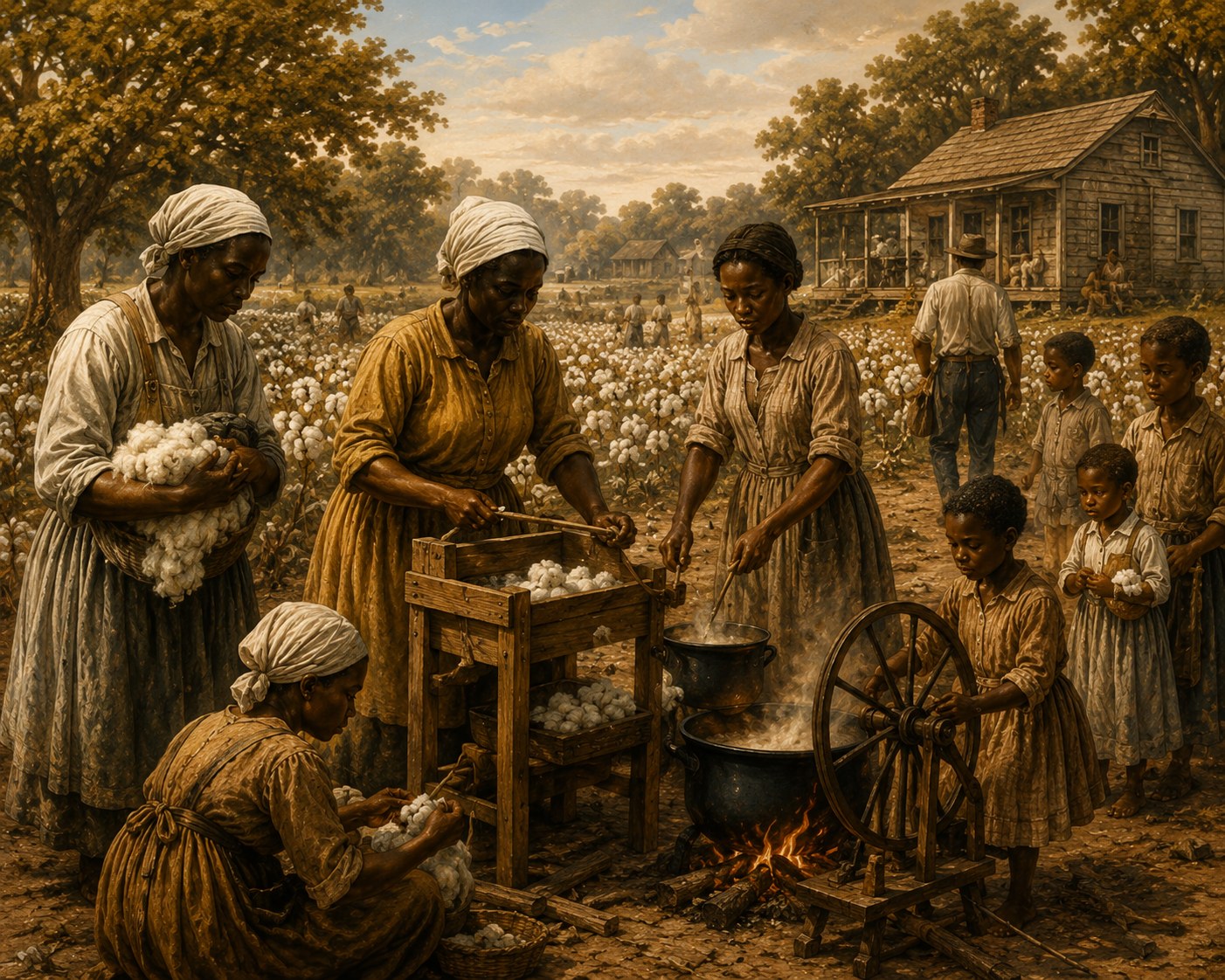
Where the story begins
The documented chain begins with a June 24, 1776 deed of gift involving Phyllis and Jean “and increase.” It continues through the Stevens family, Henry Stevens’s 1811 estate, the 1814 chancery case Tucker v. Stevens, later probate proceedings, and the sale of Jaunty in 1823.
What the research recovers
The case does more than identify names in property records. It rebuilds family relationships, follows migration from Union County, South Carolina, to Greene County, Alabama, and places Harriet, Caroline, Reuben, Parthenia, and their mother Jaunty back into a connected human story.
Deed of gift transfers Phyllis and Jean “and increase.”
Henry Stevens’s estate and chancery litigation expose the legal and financial structures surrounding enslaved family members.
Jaunty appears in estate proceedings and is purchased for $450.
Jaunty and her children appear in freedom-era census records in Greene County, Alabama.
Why Jaunty belongs here
This is a model of reparative genealogy: the archive is read not only for ownership, but for kinship, coercion, resistance, survival, and descendant memory. The page now lives under Case Studies and is also featured directly on the homepage.