The Enslaver Records
The white Guions of New Bern — physicians, merchants, lawyers, and bank directors descended from
Dr. Isaac Guion (1741–1803) and Ferebee Pugh Williams — were not planters but urban professionals, and their
records show how a commercial town's elite used enslaved people as labor, as gifts, and as instruments of credit. These
documents, gathered in Session I, span 1786 to 1854: the earliest bills of sale, the runaway notices that record resistance,
the purchases of John W. Guion, and the wills that passed human beings between generations.
Early Deeds, Sales & Gifts, 1786–1805
Shadrack, Dinah, Boston, Rose, Quam, Sall — children and adults moving among Guion kin as property, keeping the white family's wealth intact on paper even as it fractured Black families in practice.
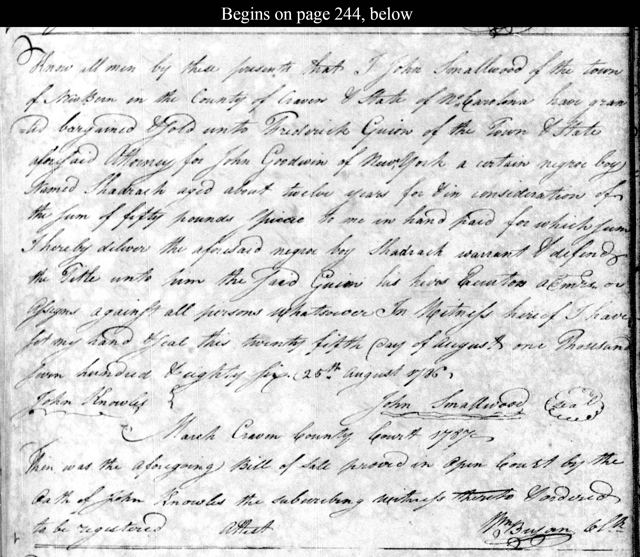
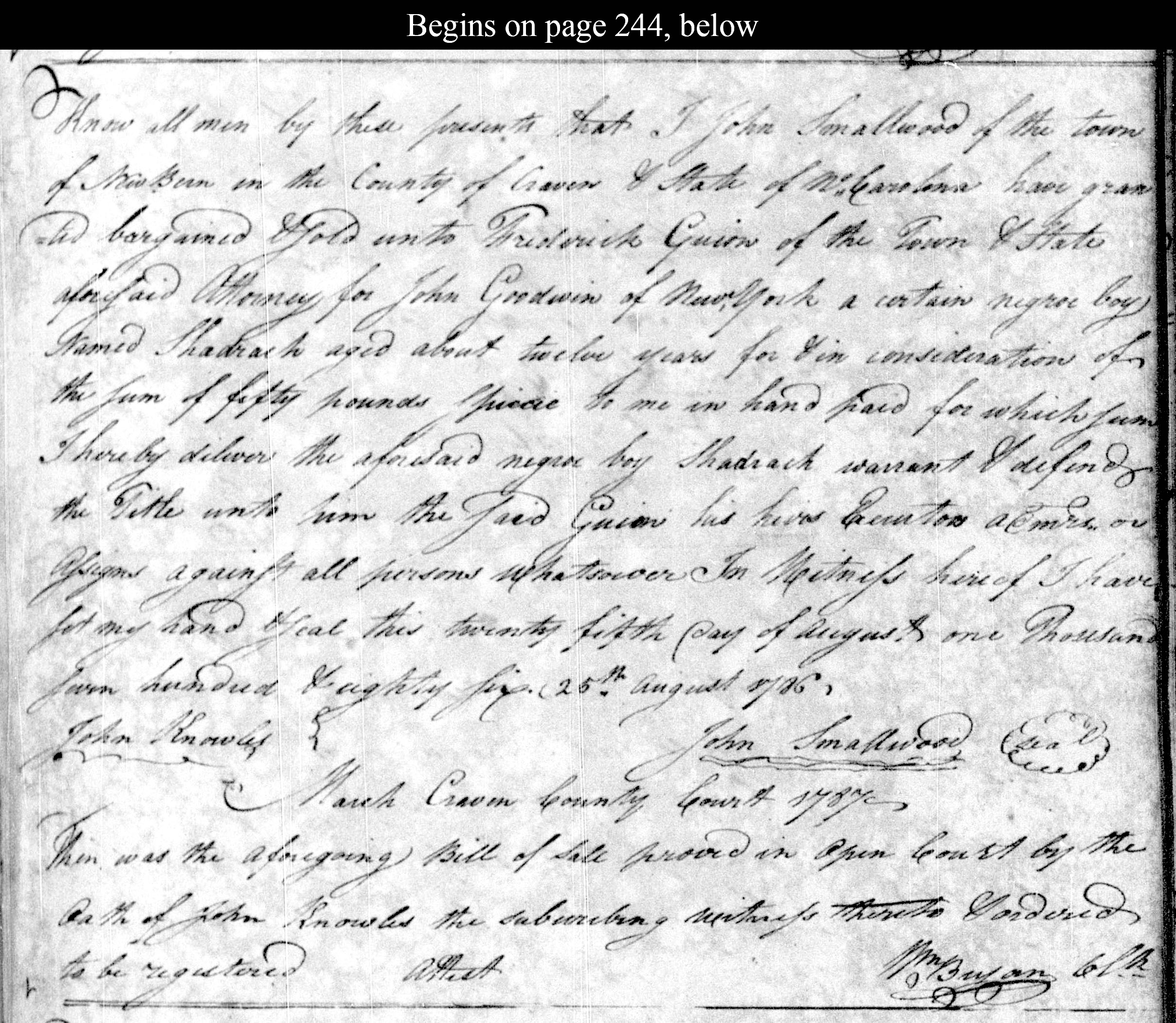
Session I · December 2025Bill of Sale for Shadrack, 1786
A boy of about twelve, sold with Frederick Guion as grantee — the earliest Guion record in the archive.
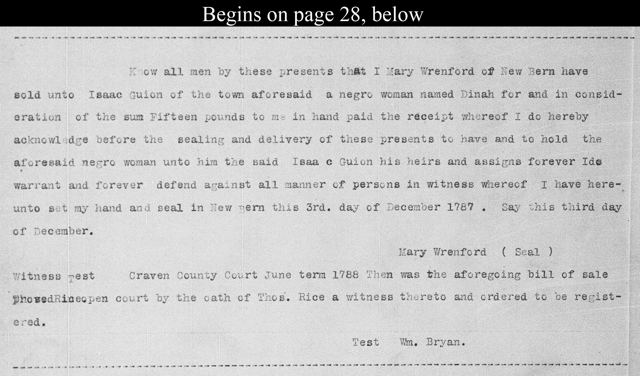
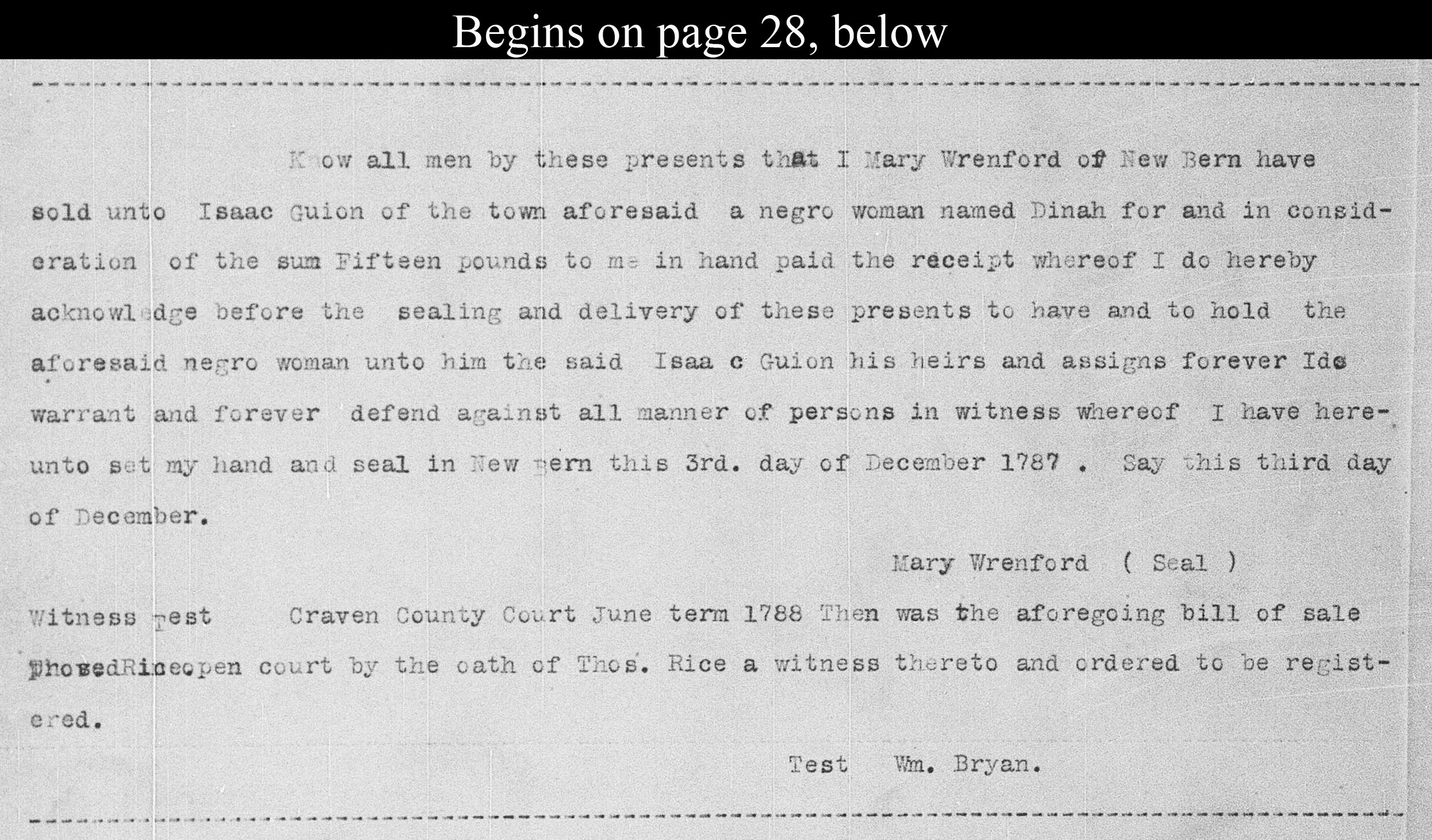
Session I · December 2025Deed for Dinah, 1787
Mary Wrenford conveys the enslaved woman Dinah to Isaac Guion — the physician patriarch's household built on bound labor.
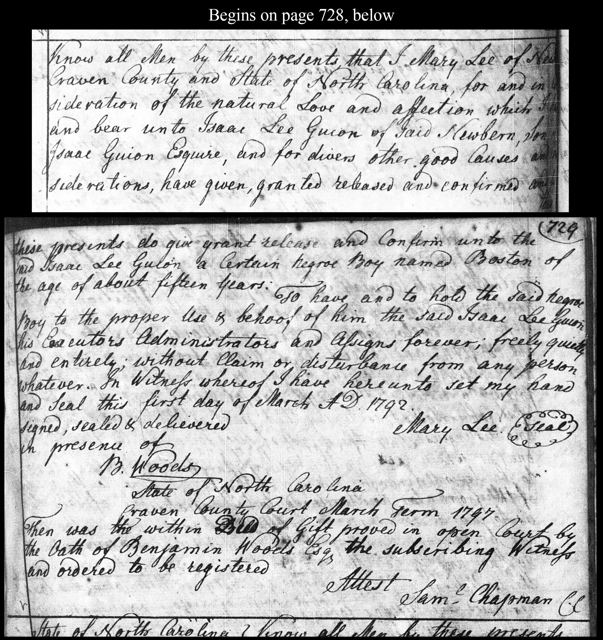
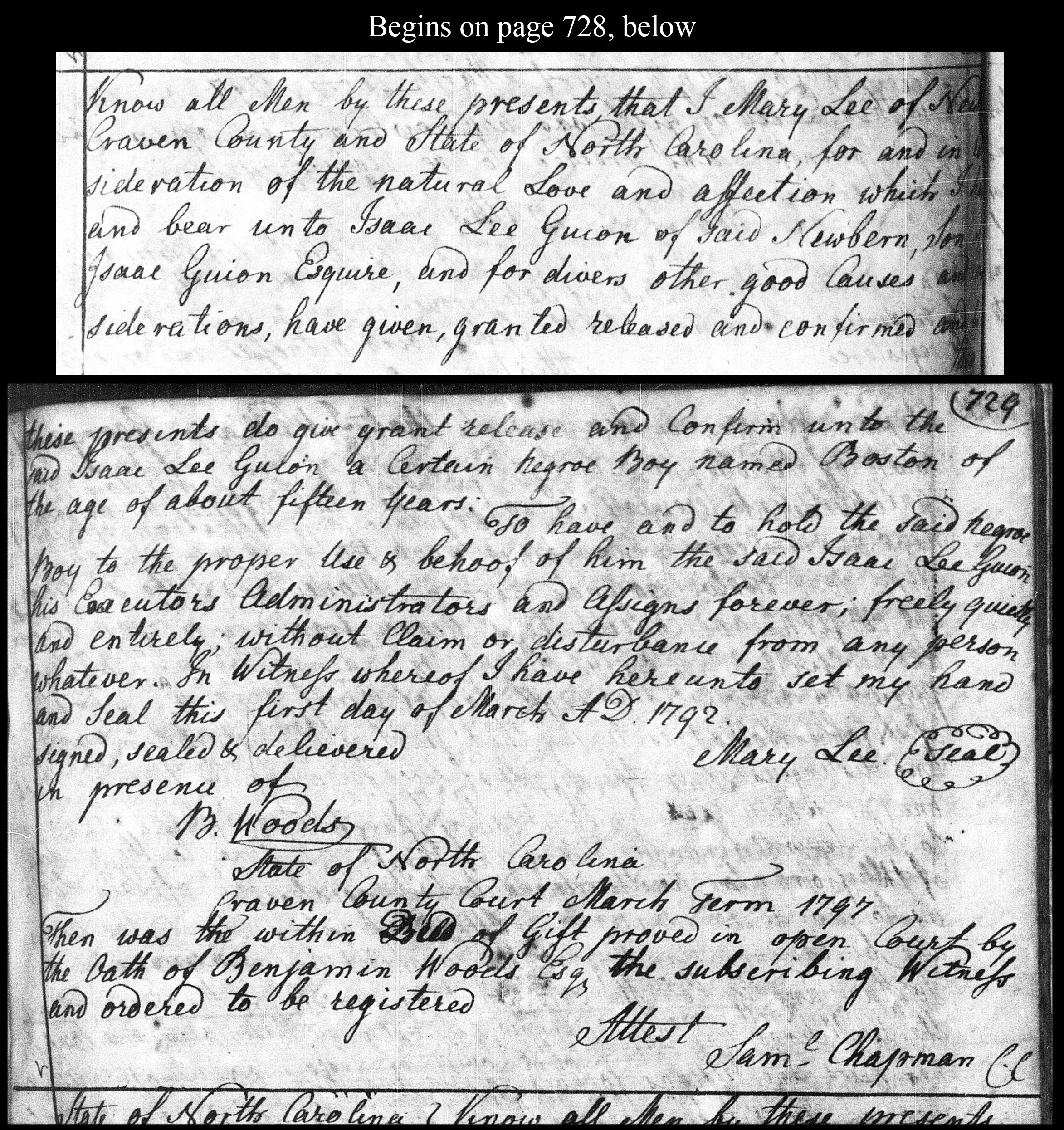
Session I · December 2025Gift of Boston, 1790s
Boston, a boy of about fifteen, given to Isaac Lee Guion — enslaved children passed as gifts within the family.
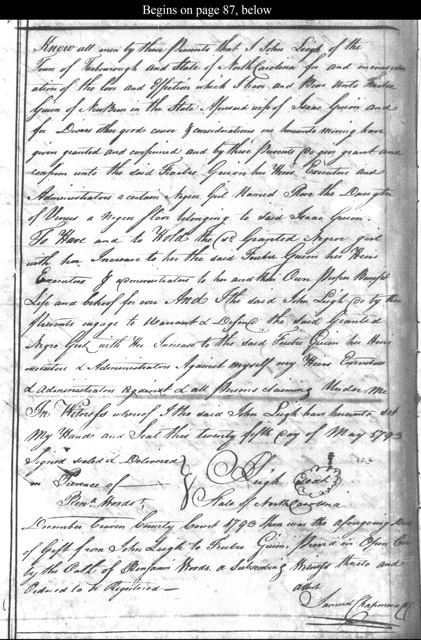
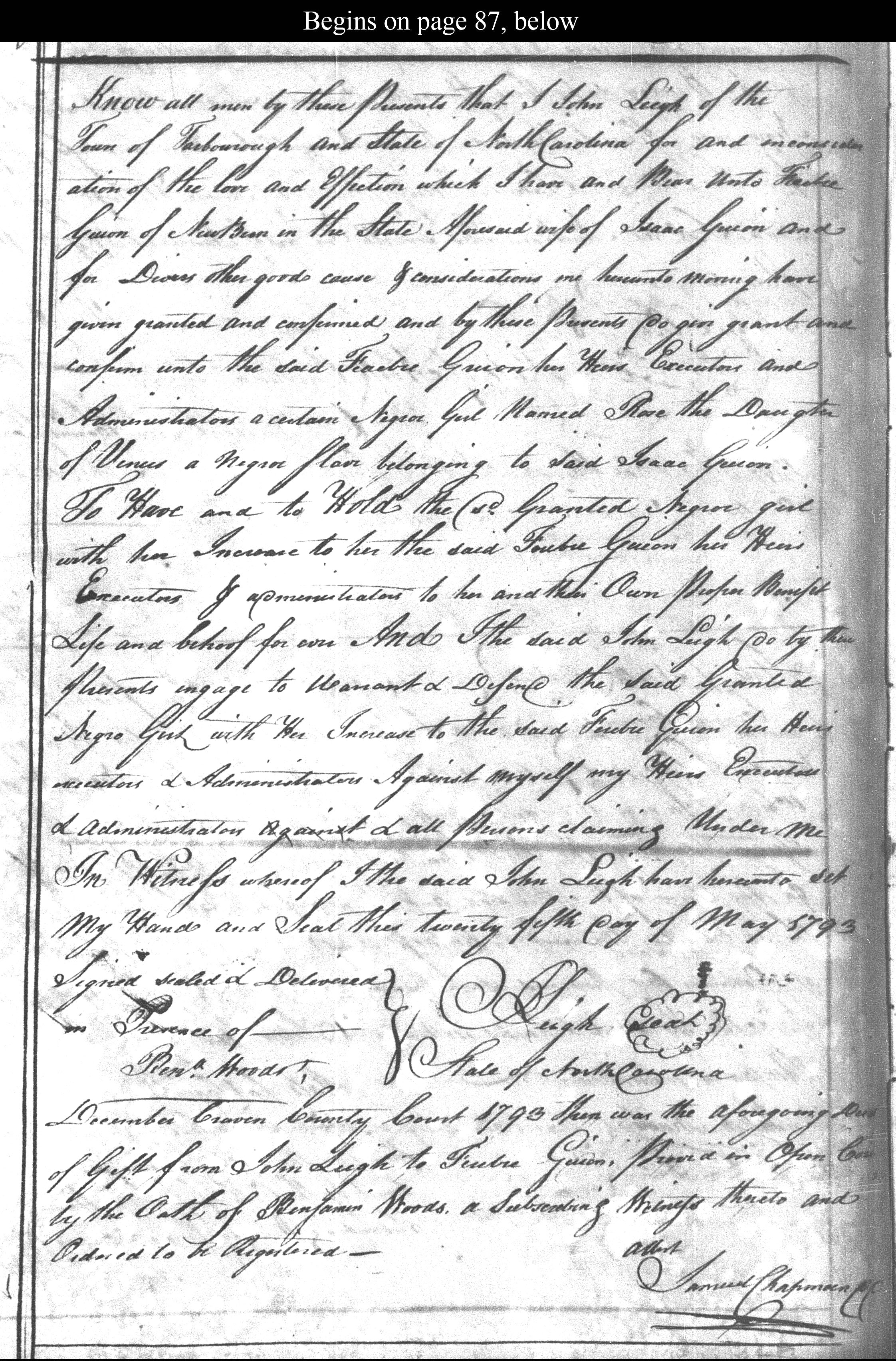
Session I · December 2025Gift of Rose, 1793
Rose, daughter of Venus, given by John Leigh to Ferebee Guion — a mother's daughter converted into a wedding-portion of property.
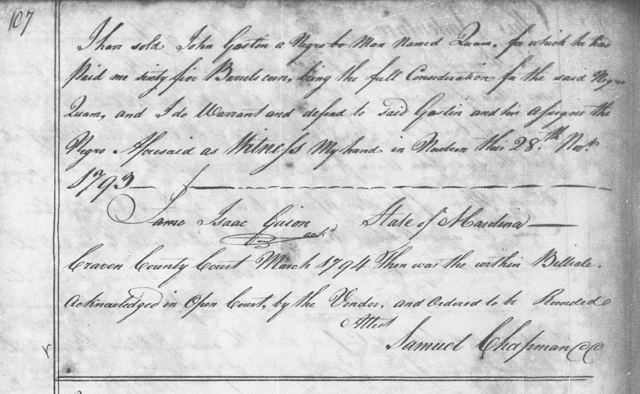
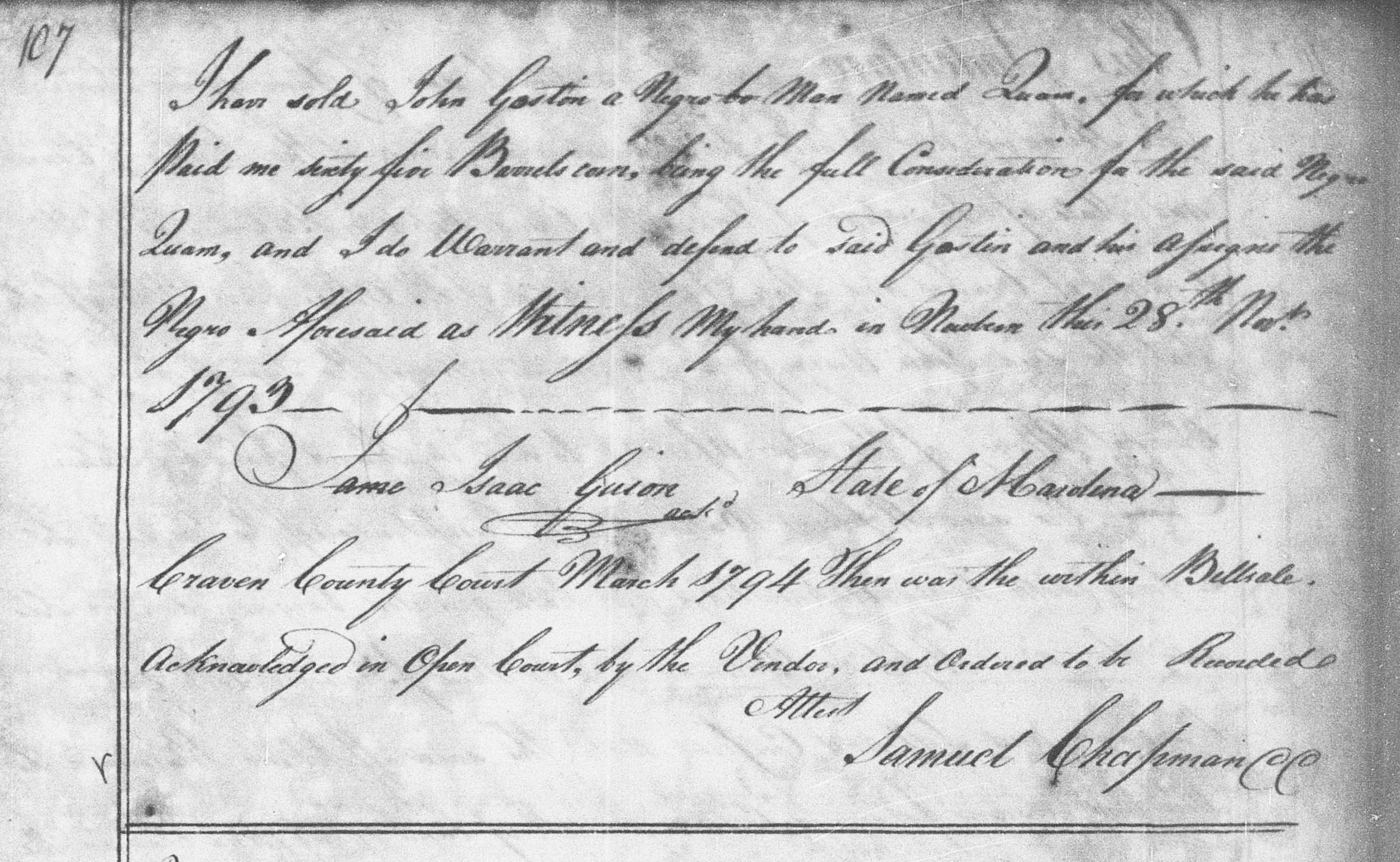
Session I · December 2025Sale of Quam, 1793
James Isaac Guion as grantor, selling the enslaved man Quam to John Gaston.
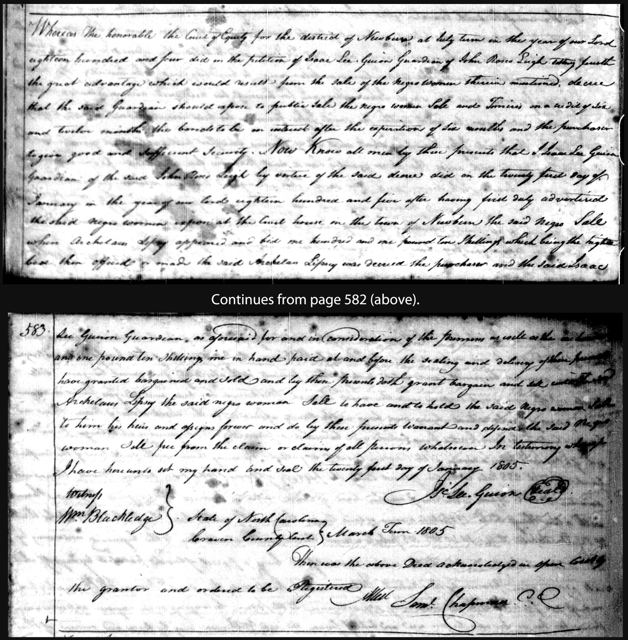
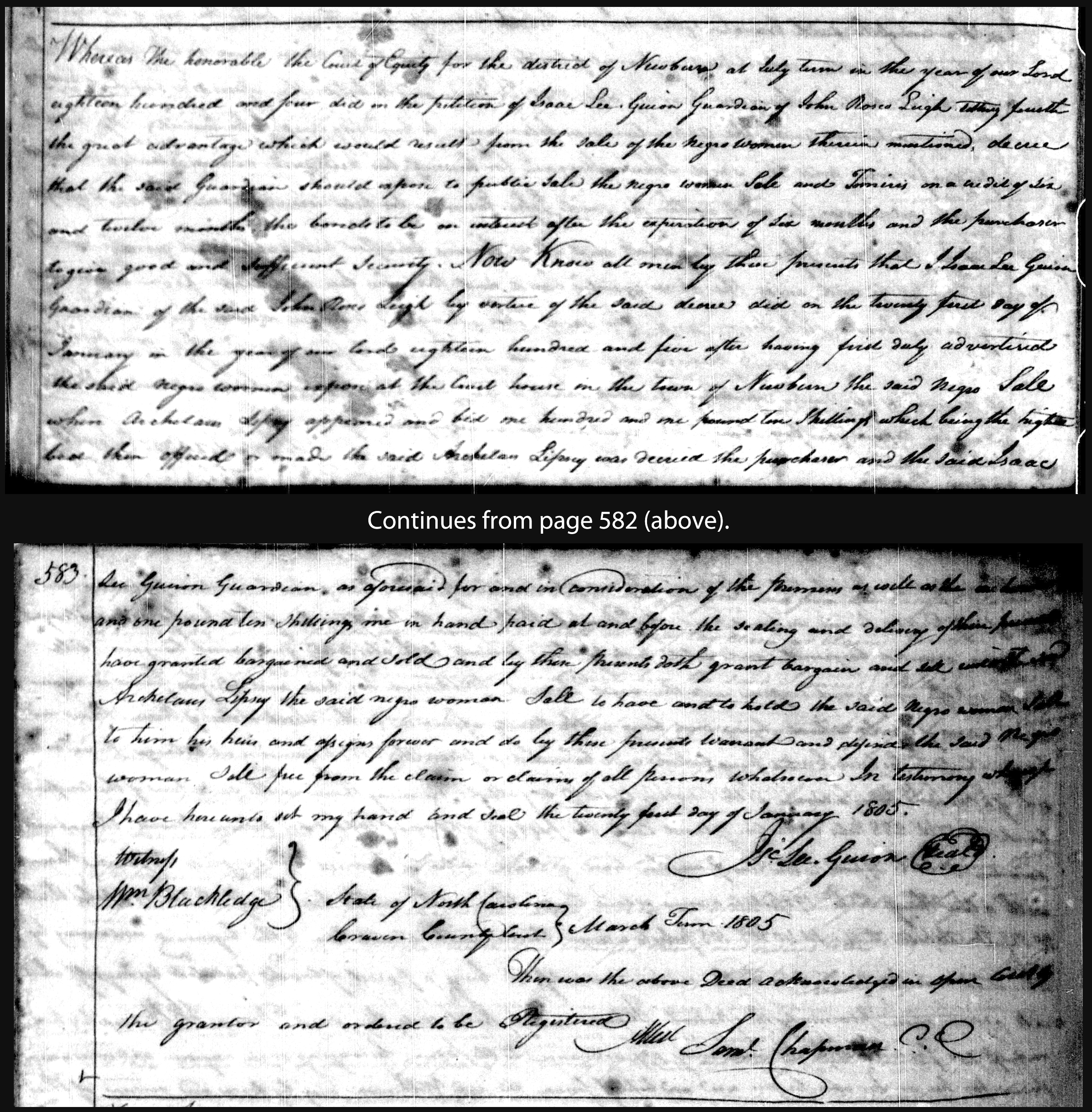
Session I · December 2025Equity Sale of Sall, 1805
A court-ordered sale of the enslaved woman Sall (possibly Sarah), with Isaac Lee Guion acting as guardian of the grantor — the law itself as an instrument of the trade.
Resistance: The Runaway Notices
Flight was the enslaved community's own record of protest, preserved — ironically — in the enslavers' advertisements.
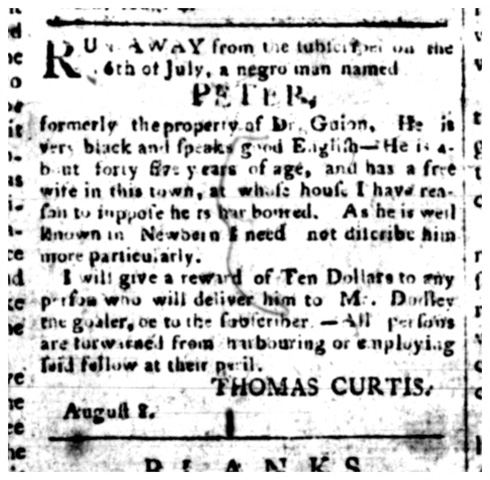
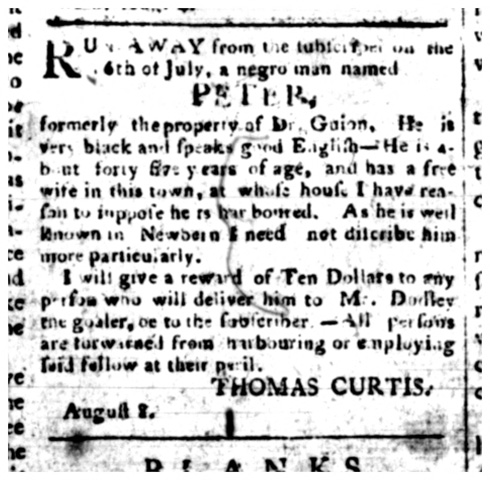
Session I · December 2025Runaway Notice, 1805
An advertisement for Peter, “formerly the property of Dr. Guion” — a man who chose flight, and a family that advertised to recover him.
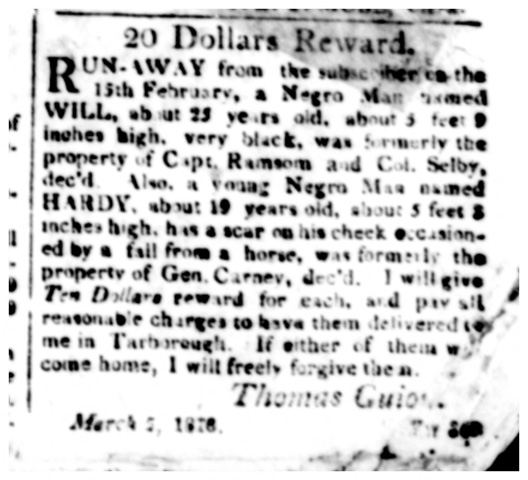
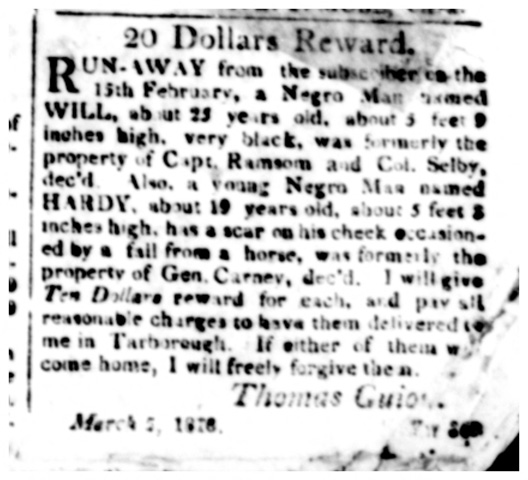
Session I · December 2025Runaway Advertisement — Thomas Guion
Thomas Guion posts for the return of a fleeing man — resistance recorded in the enslavers' own newspapers.
John W. Guion Builds an Estate, 1812–1832
The purchases and trust deeds of the man whose 1842 probate anchors this archive — including the 1832 Blackledge trust in which Hannah's mother Sukey was pledged as loan collateral.
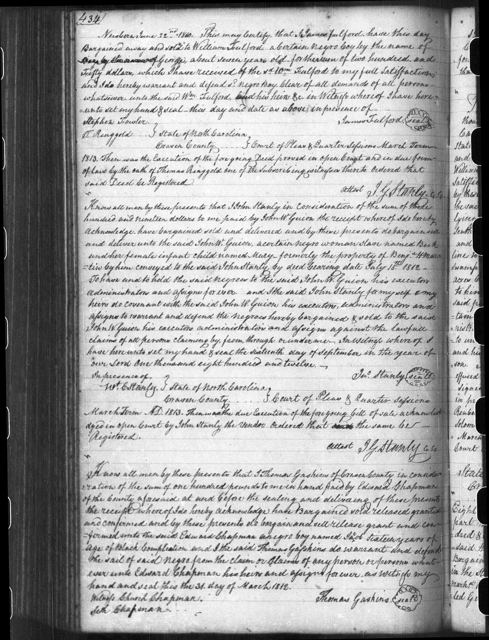
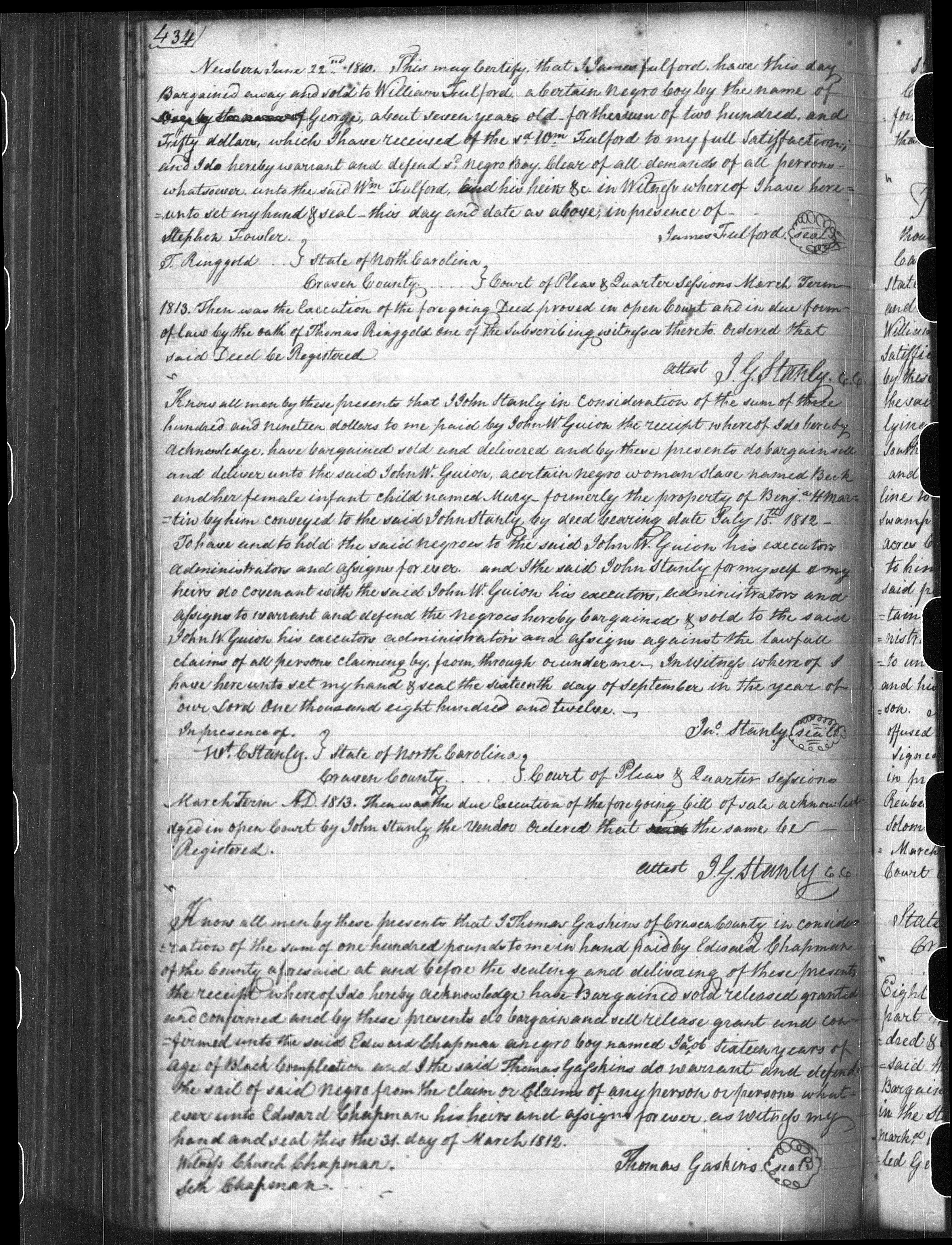
Session I · December 2025John Stanly to John W. Guion: Beck and Infant Mary, 1812
John W. Guion purchases Beck and her infant daughter Mary — mother and child bought together, thirty years before his estate would scatter other mothers' children.
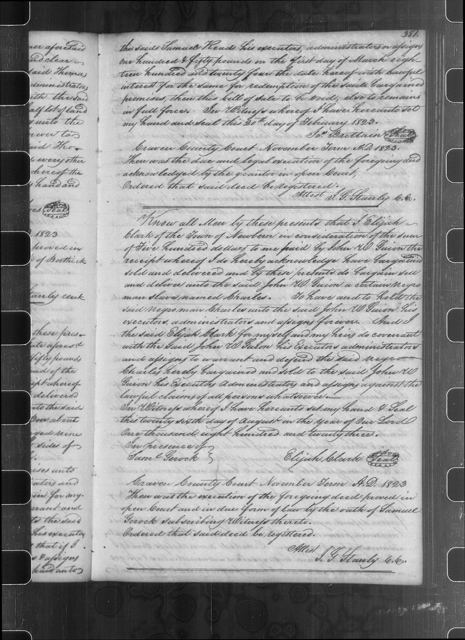
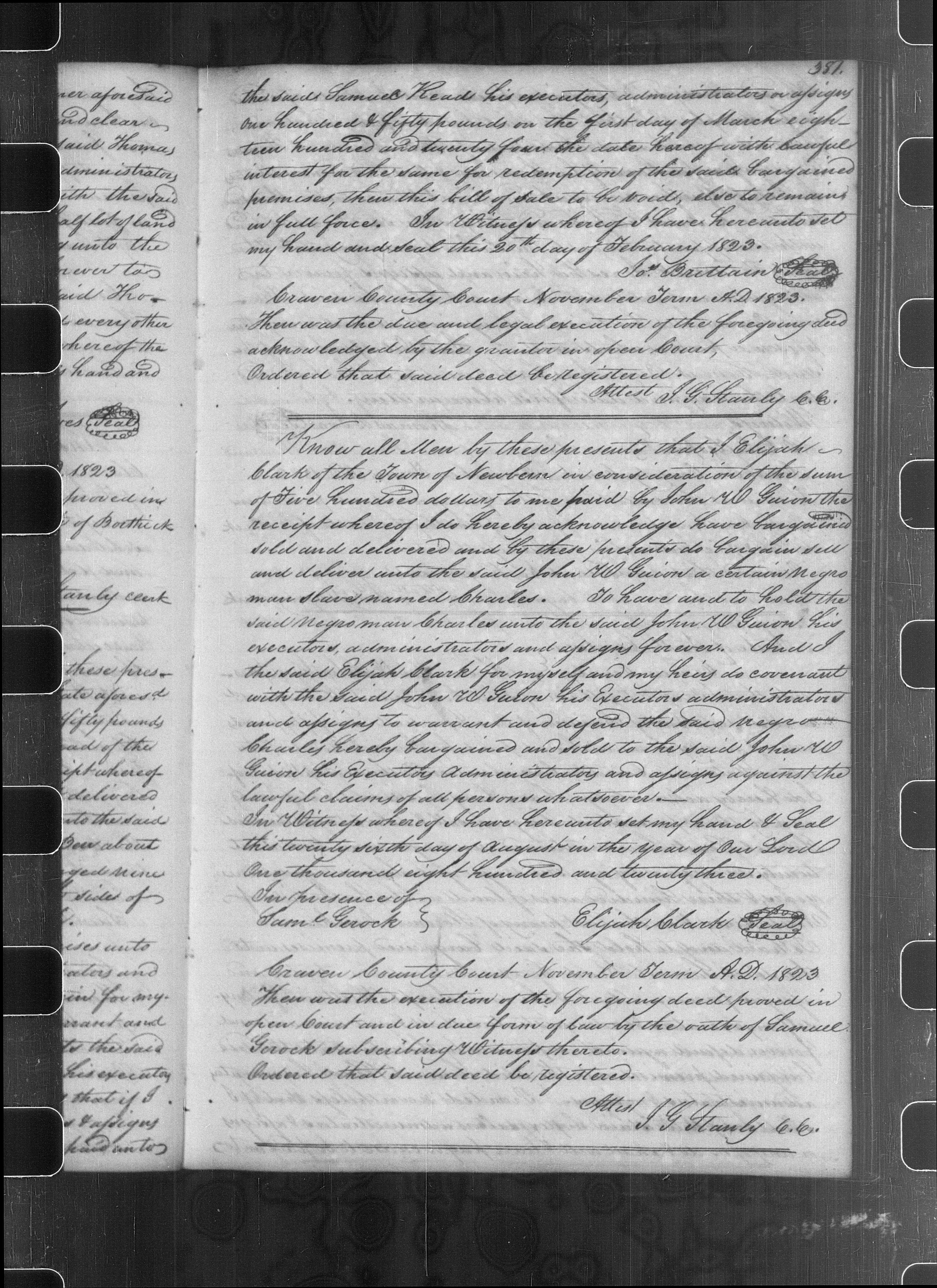
Session I · December 2025Purchase of Charles, 1823
John W. Guion buys the enslaved man Charles from Elijah Clark — the estate that would be inventoried in 1842 still growing.
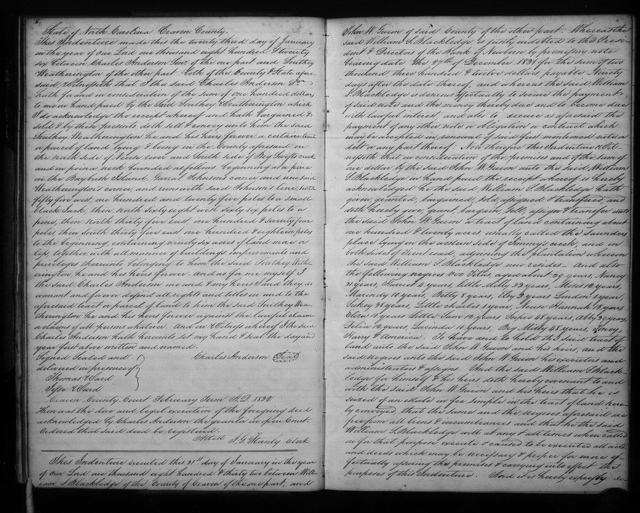
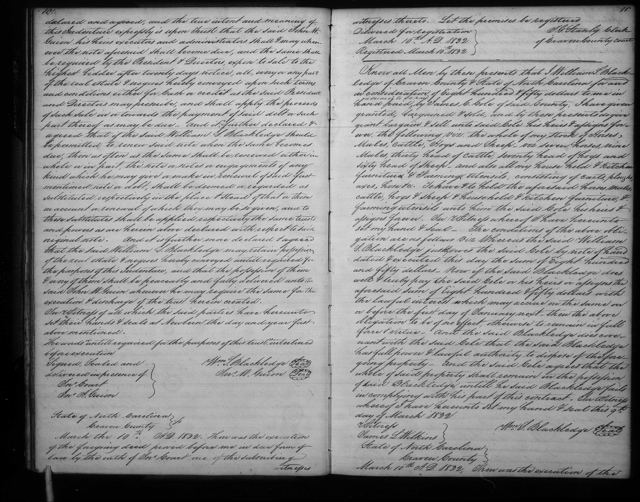
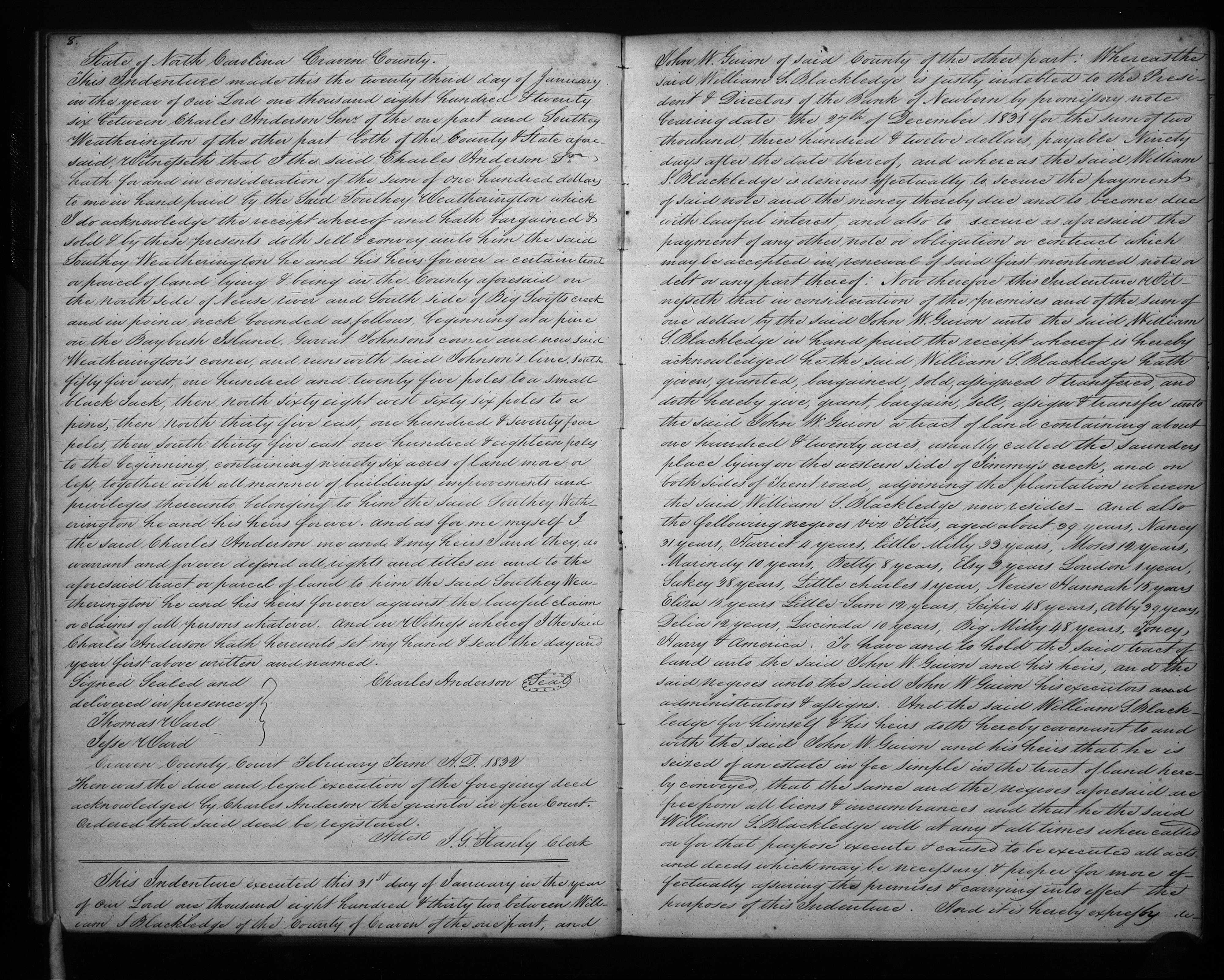
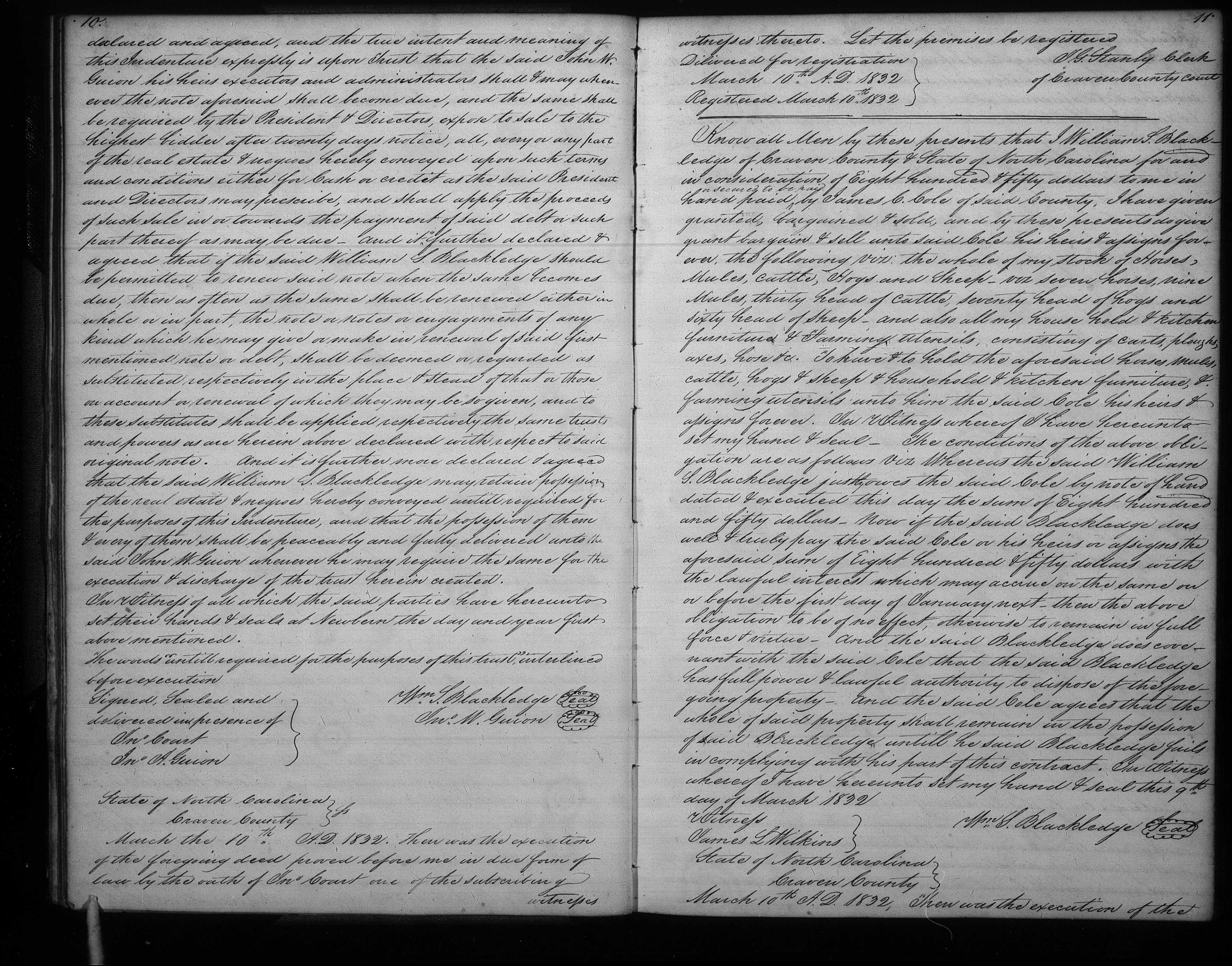
Session I · December 2025The 1832 Blackledge Trust Deed — Page One
31 January 1832: William S. Blackledge pledges dozens of named enslaved people and the 120-acre “Saunders place” to trustee John W. Guion as collateral for a bank loan. Sukey, about 38 — Hannah's mother — is among those pledged.
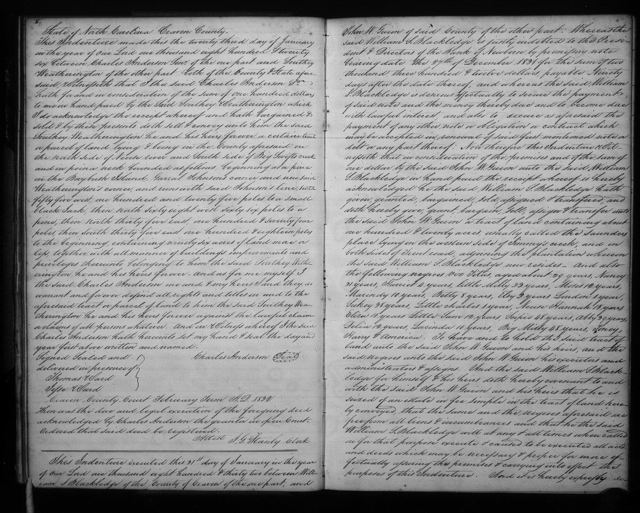
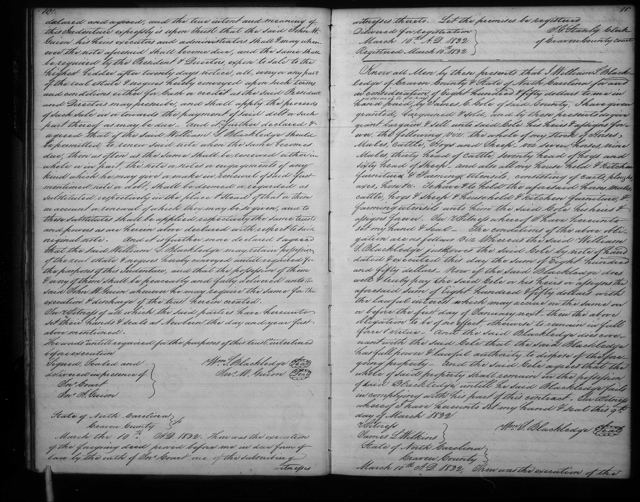
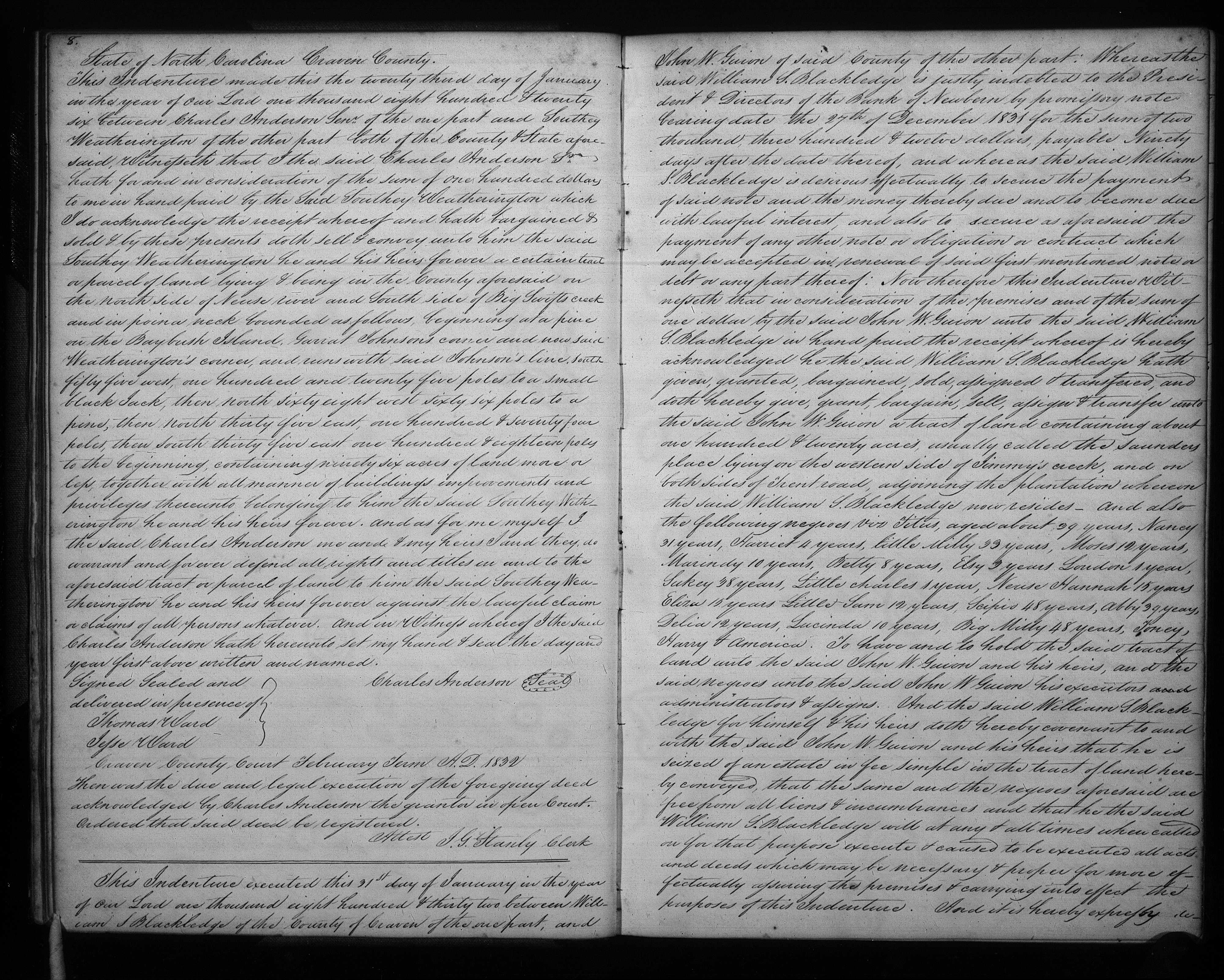
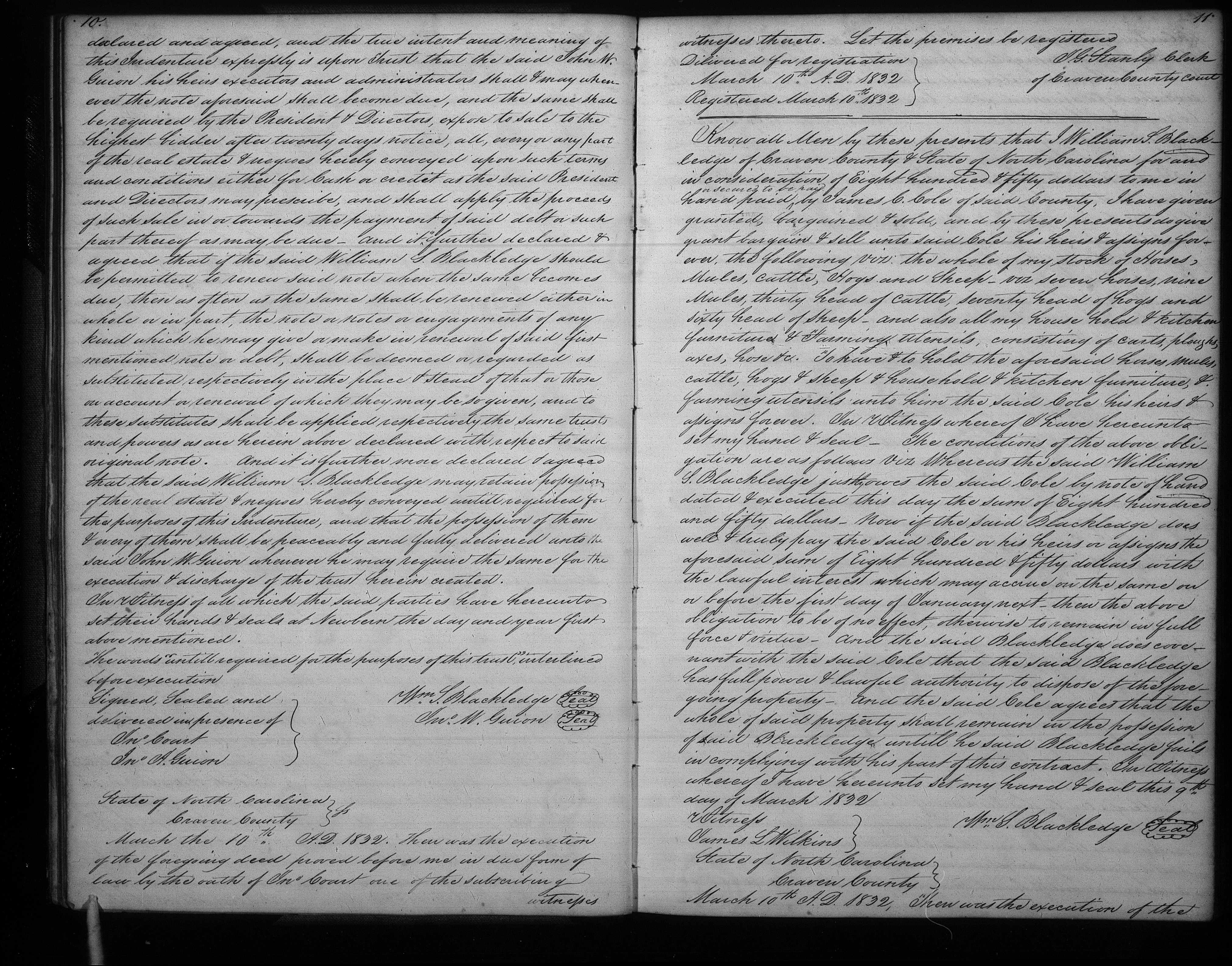
Session I · December 2025The 1832 Blackledge Trust Deed — Page Two
Continuation of the trust deed: human beings as instruments of credit, written into a banker's ledger before Hannah was two years old.
Session I · December 2025The 1832 Blackledge Trust Deed — Page Three
Further continuation of the 1832 conveyance naming the enslaved and the Craven County land.
Session I · December 2025The 1832 Blackledge Trust Deed — Page Four
Final page of the trust deed record.
Wills & the Family Map
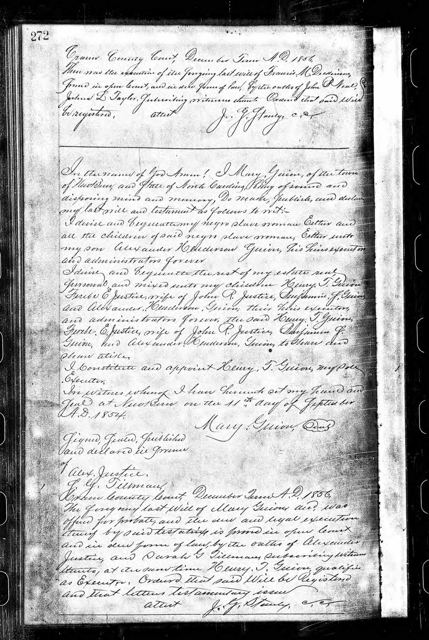
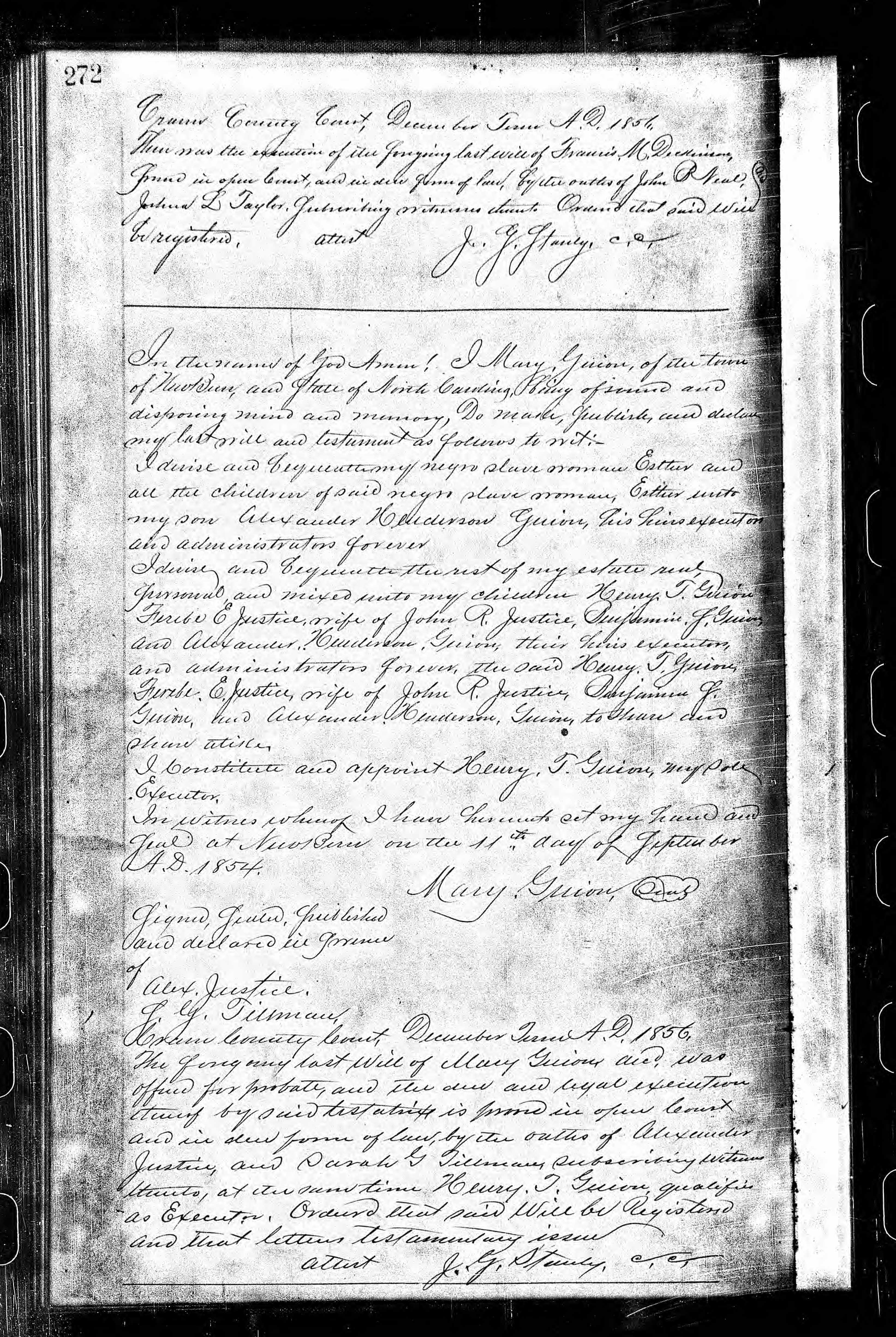
Session I · December 2025Will of Mary Guion, 1854
The widow bequeaths “my negro slave woman, Esther, and all the children of said Esther” to Alexander Henderson Guion — a woman and her unborn descendants devised in a single clause.
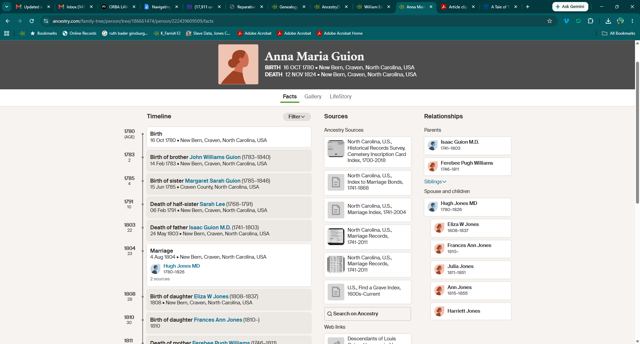
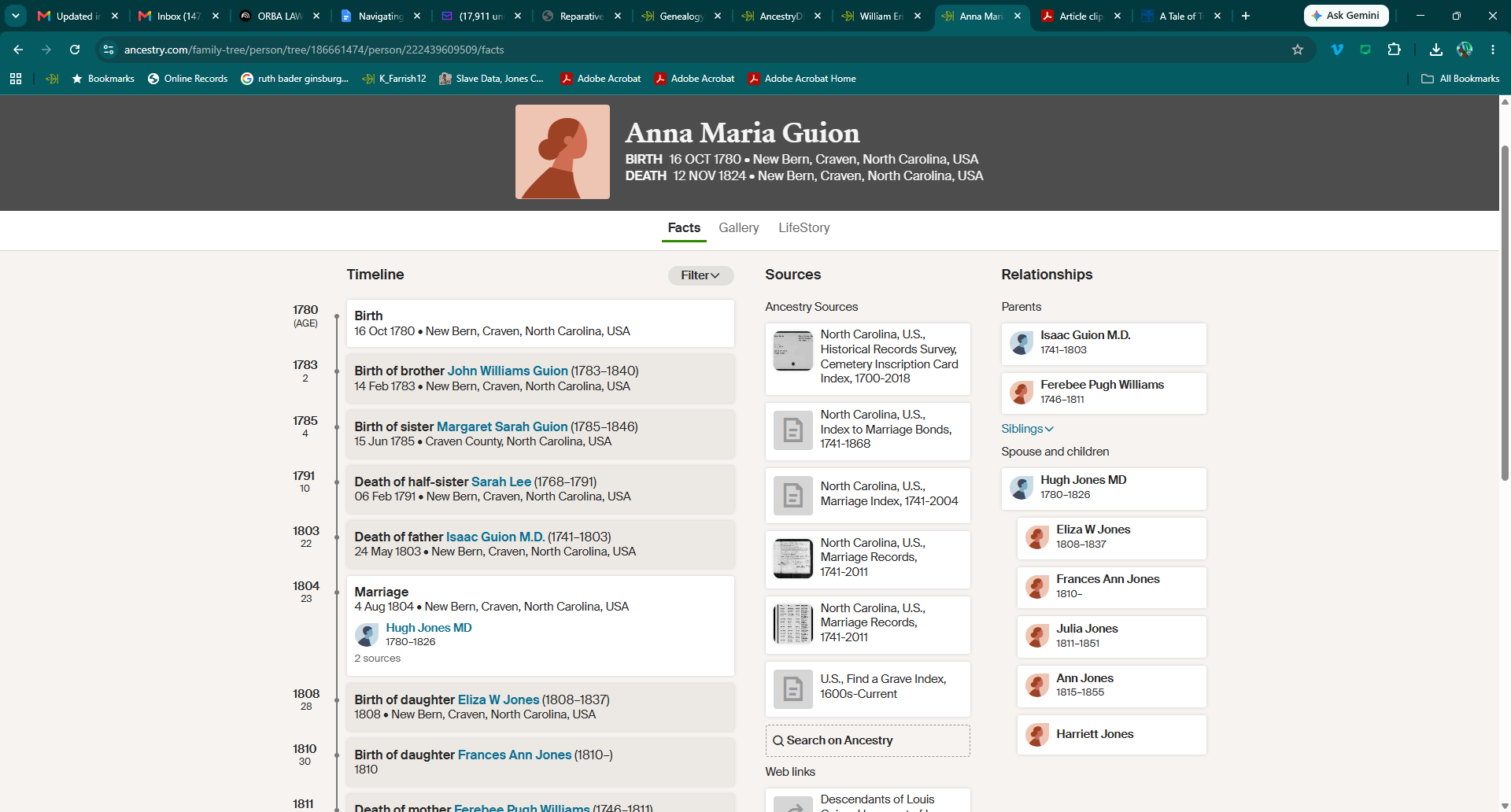
Session I · December 2025The White Guion Family Tree
The enslaving family's genealogy (Lawlor tree), from Dr. Isaac Guion and Ferebee Pugh Williams through the eight heirs of 1843 — the map of the network that held the enslaved families of this archive.