Lincolnton & Freedman Town: The Schenck Dispersals
The land beneath Hannah's Lincolnton lot — and beneath the settlement the 1880 enumerator named “Freedmantown” — came out of a single estate. Daniel Shuford, a Lincolnton carpenter of substance, died intestate in July 1867; the attorney David Schenck (who had read law under Haywood W. Guion) took administration, and because the estate's debts ran some $4,200 beyond its effects, he petitioned to sell the land. The court-ordered creditor's sale of late 1867 subdivided the Shuford holdings into small numbered town lots — and the purchasers of the “near Town” lots were overwhelmingly freedpeople. That sale is, in documentary terms, the founding event of Freedman Town, and Hannah Guion was among its purchasers.
Who Bought What: The Shuford Dispersal
| Purchaser | Lots / parcel | Note |
|---|---|---|
| Hannah Guion (“Col'd”) | Lot No. 3, “Shuford land near Town” | Adjoining Jack Sumner; conveyed by administrator's deed, 14 April 1869 |
| Benjamin S. Guion | Lots No. 7, 8, 9 & 10 (one block), $164.75 | Haywood's brother; the 1883 church acre was carved from this block |
| Peter McCoy (col'd) | “Near Town” lot(s) | Freedman purchaser |
| Ishmael Roberts | “Near Town” lot(s) | Brick mason, born free; in the 1880 register |
| Noah Herndon | “Near Town” lot(s) | Head of a Herndon household in the 1880 register |
| L. C. Russell | “Near Town” lot(s) | The Russell surname in the register (Rev. Robert Russell) |
| Benj. McLean (col'd) | “Near Town” lot(s) | A settlement family |
| B. H. “Jack” Sumner | Several lots | The adjoining landowner named in Hannah's 1869 and 1885 deeds |
Hannah's Lot No. 3
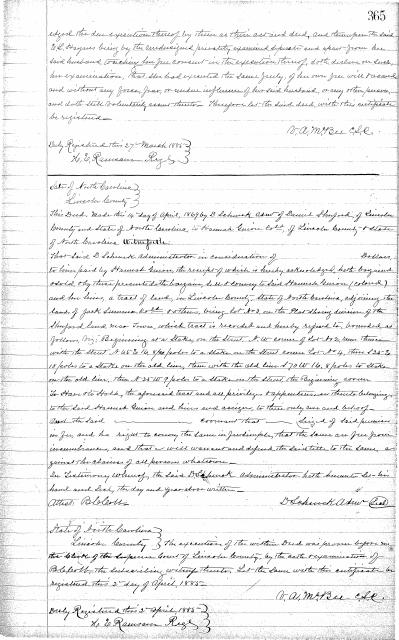
Administrator's Deed to Hannah Guion, 14 April 1869
David Schenck, administrator of Daniel Shuford, makes title to “Hannah Guion, Col'd” for Lot No. 3 of the Shuford land near town, adjoining Jack Sumner. Four years out of slavery, Hannah is a purchaser of titled real property in the settlement that became Freedman Town.
The 1869 Deed — Transcription
Full project transcription of the administrator's deed for Lot No. 3, with the metes and bounds and registration history (Deed Book 56, p. 365).
The 1880 Register & the Community
In June 1880 the enumerator wrote “Freedmantown” freehand across his page: 54 dwellings, 61 families, some 176 residents — ministers, four teachers, a midwife, brick masons, shoemakers, a drayman, railroad hands. The full register, reproduced name by name, is in the synthesis below.
Freedman Town: Synthesis & the Complete 1880 Register
The full register of the settlement the enumerator named “Freedmantown” in June 1880 — 54 dwellings, 61 families, some 176 residents — with the project's synthesis of the community's ministers, teachers, midwife, masons, and landholders.
The Church on Guion Land, 1883
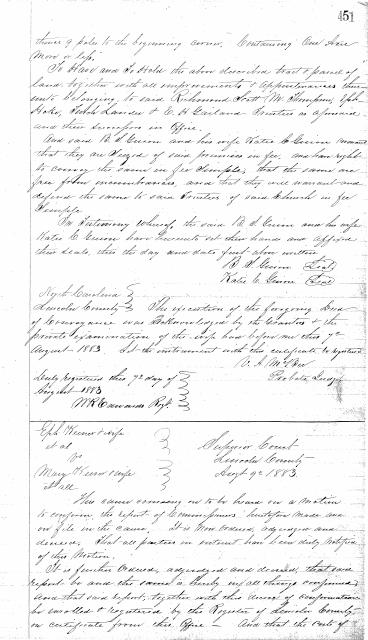
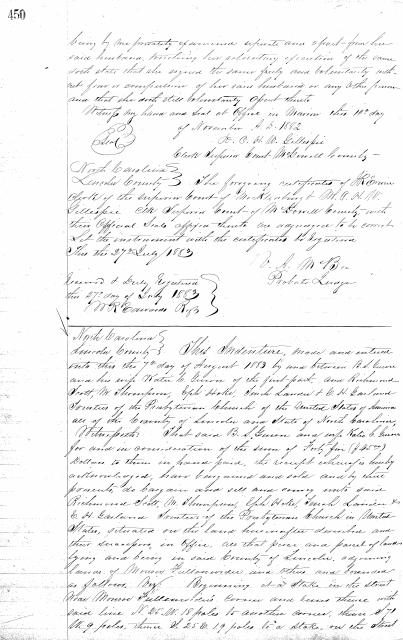
The 1883 Church Deed — Transcription
Full transcription of the conveyance (Deed Book 54, pp. 450–451): eighteen years after emancipation, the settlement bought its church ground from the family that had once enslaved the woman whose lot helped found it.
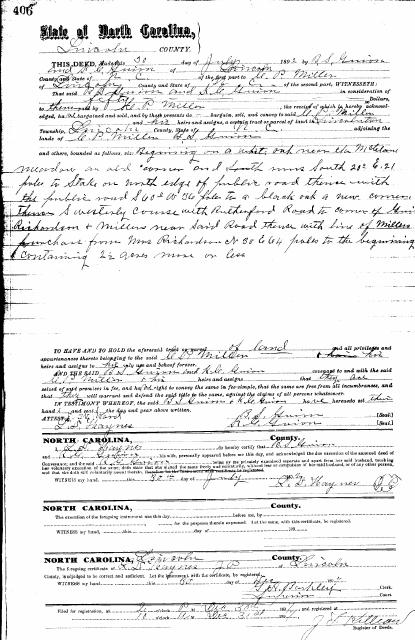
The Land Stays in Black Hands
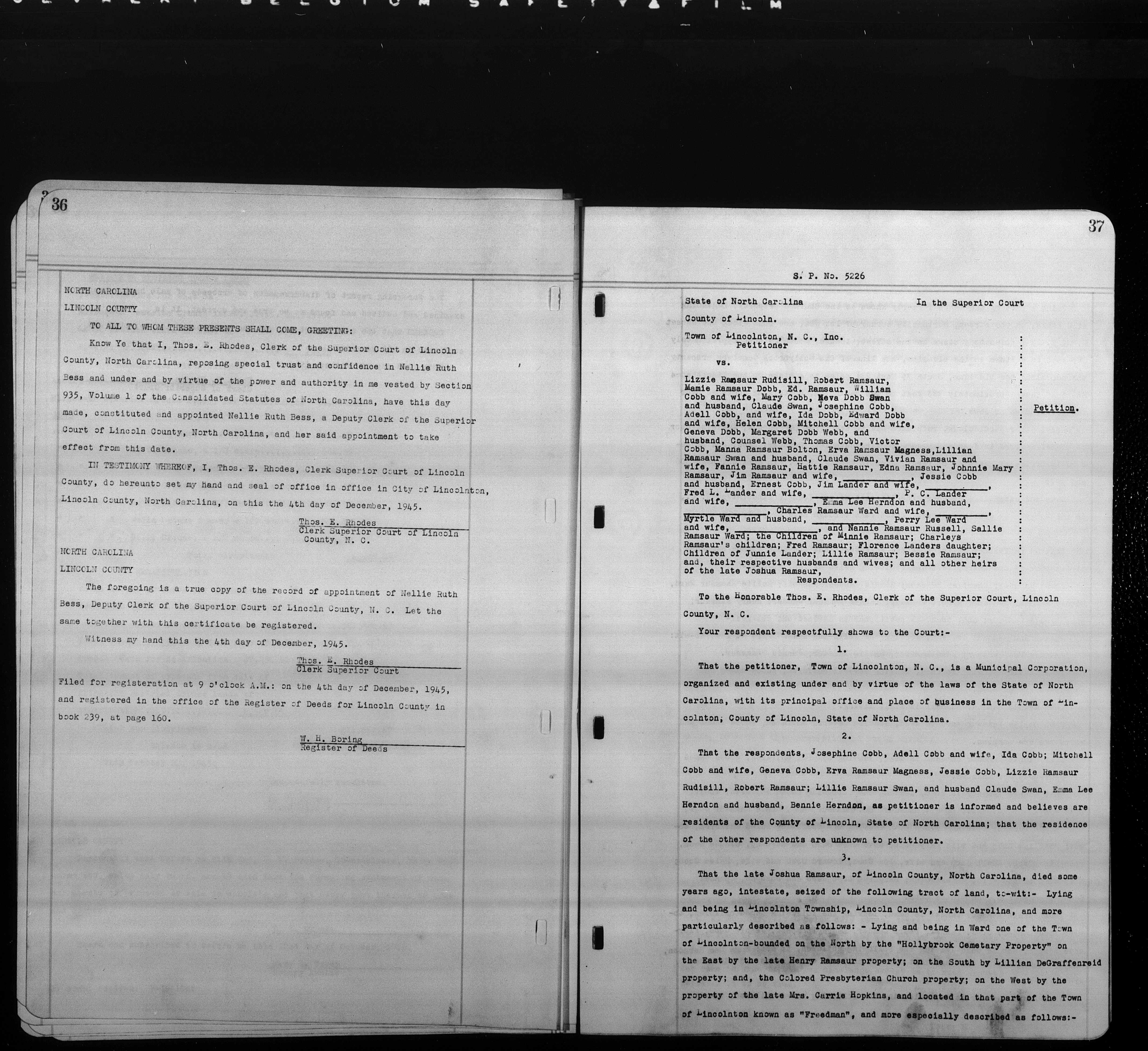
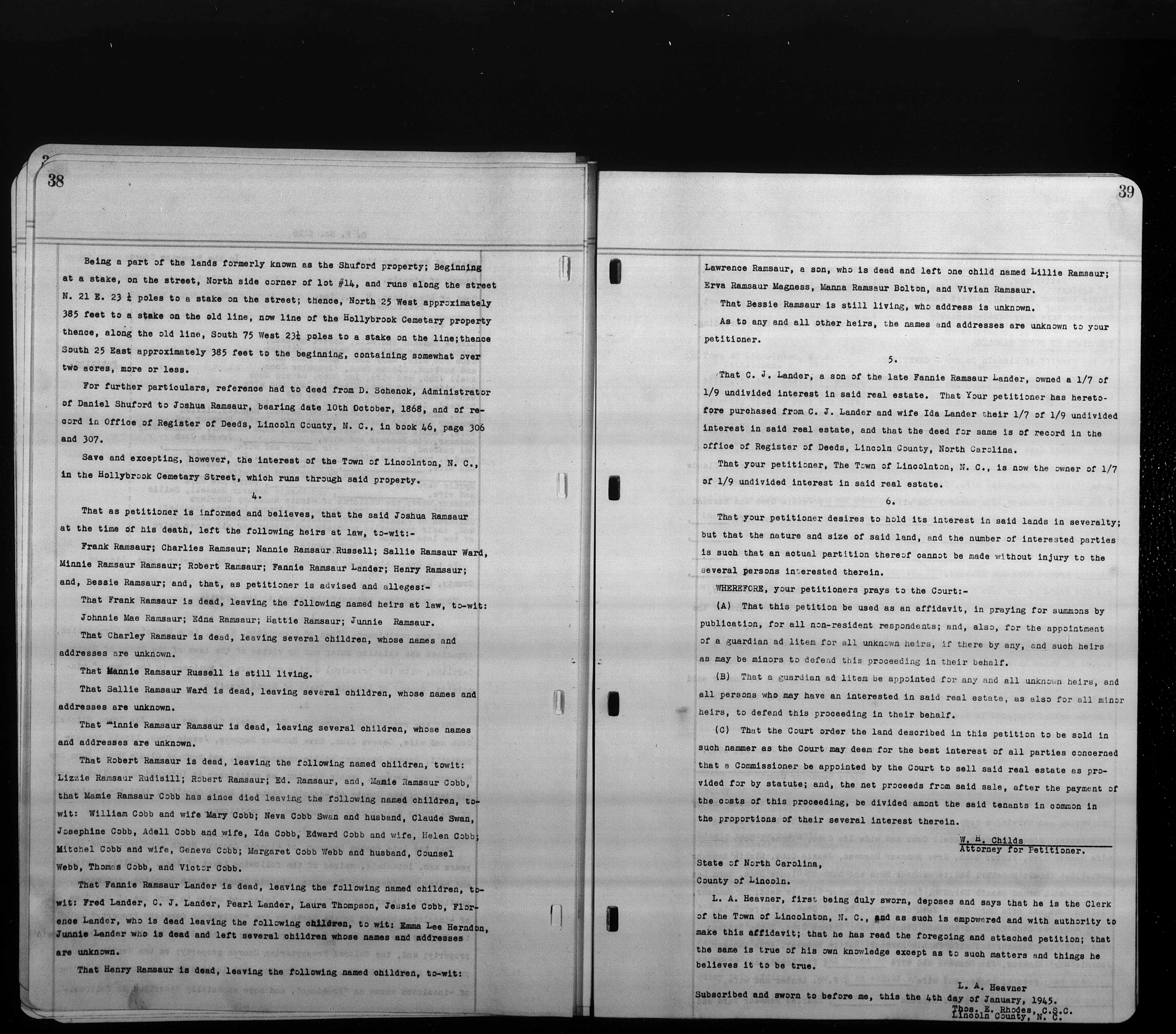
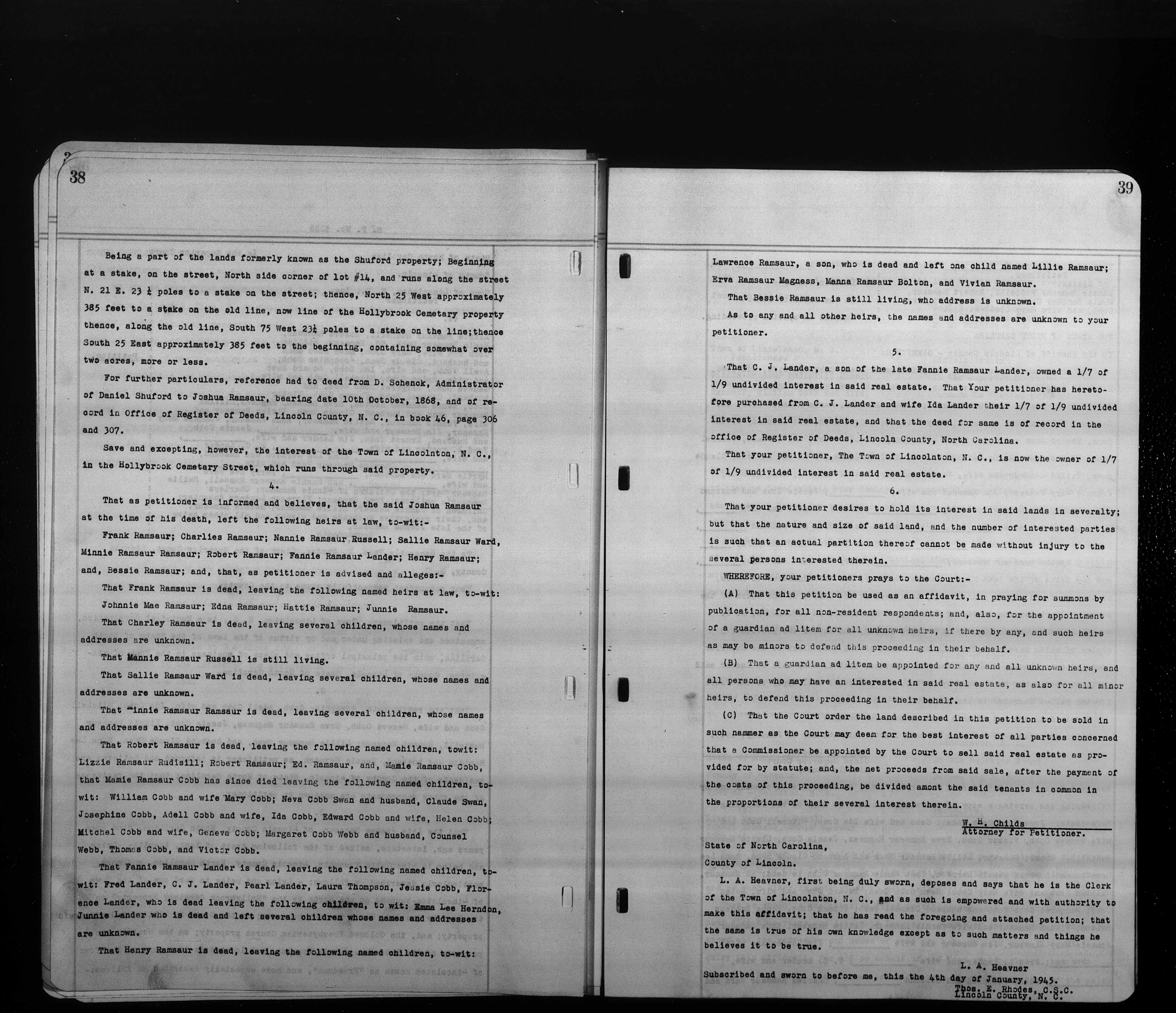
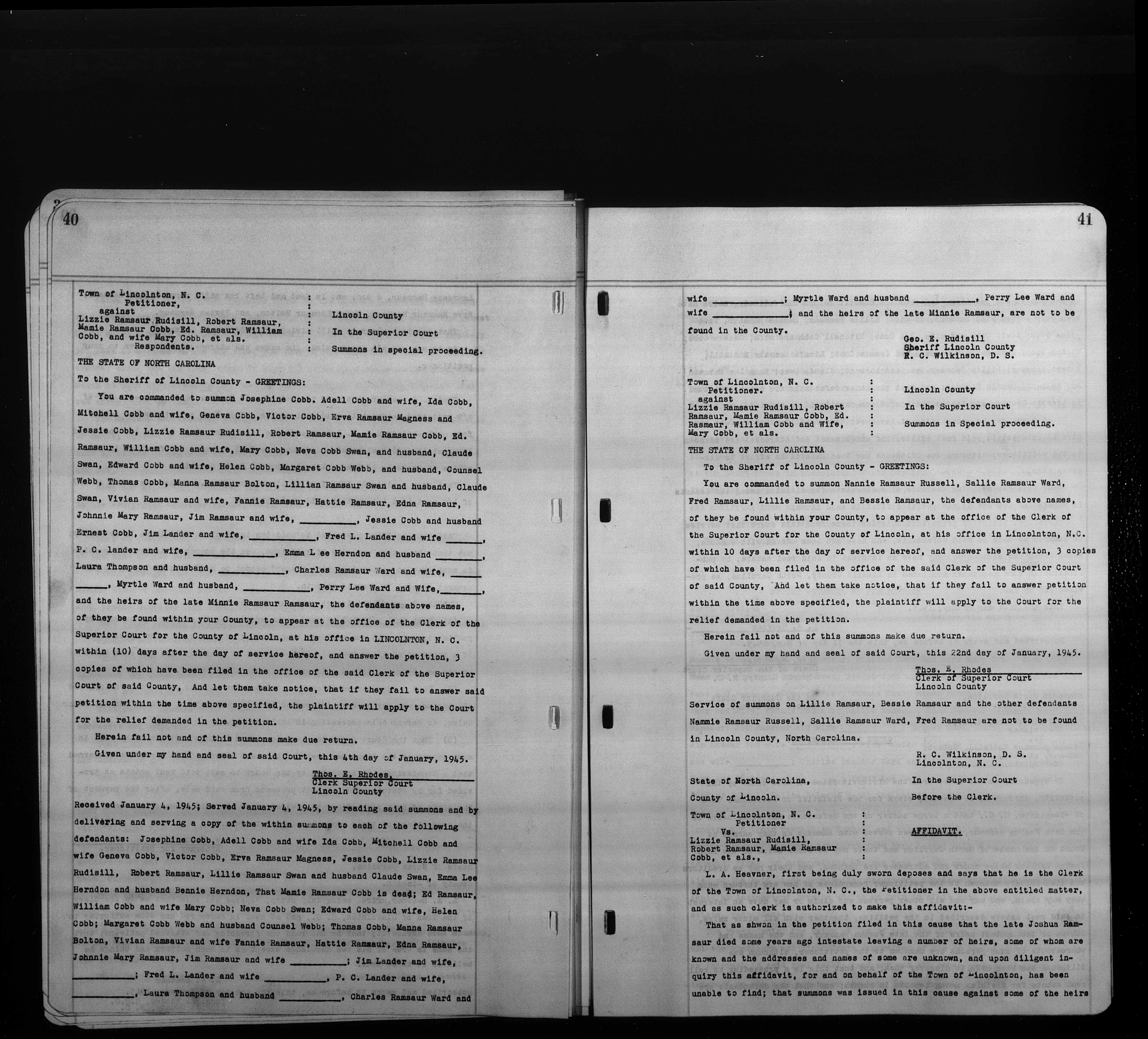
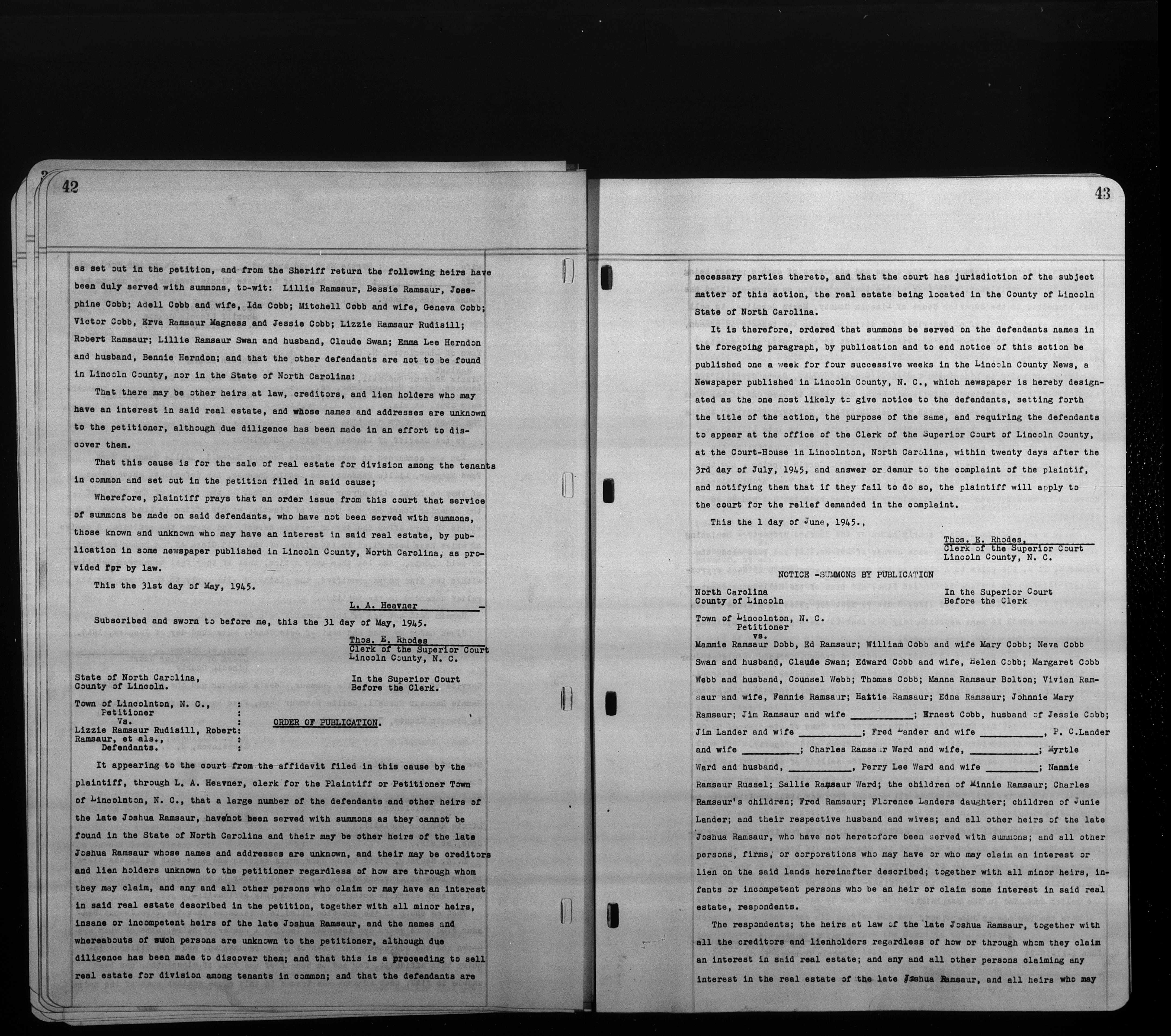
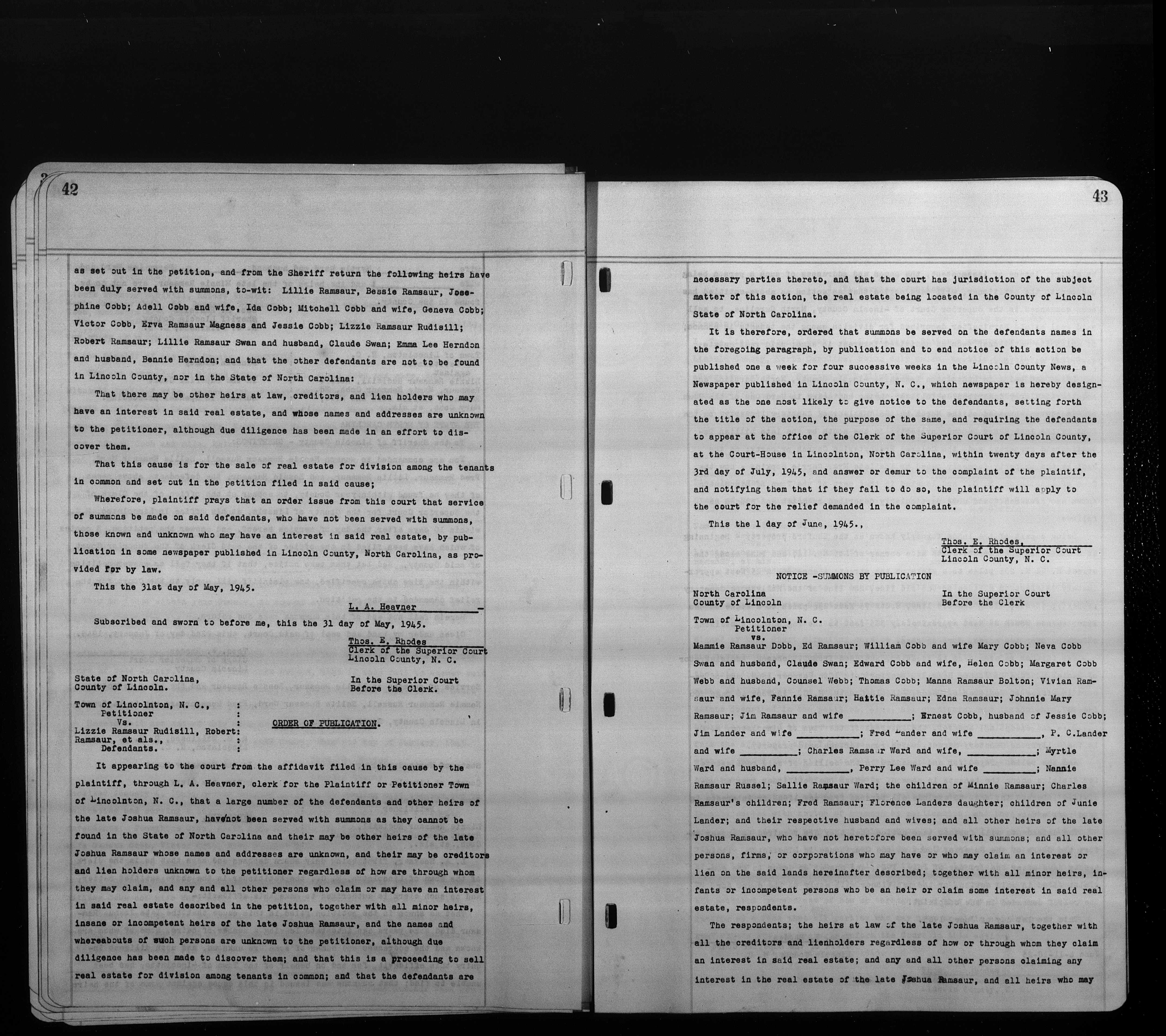
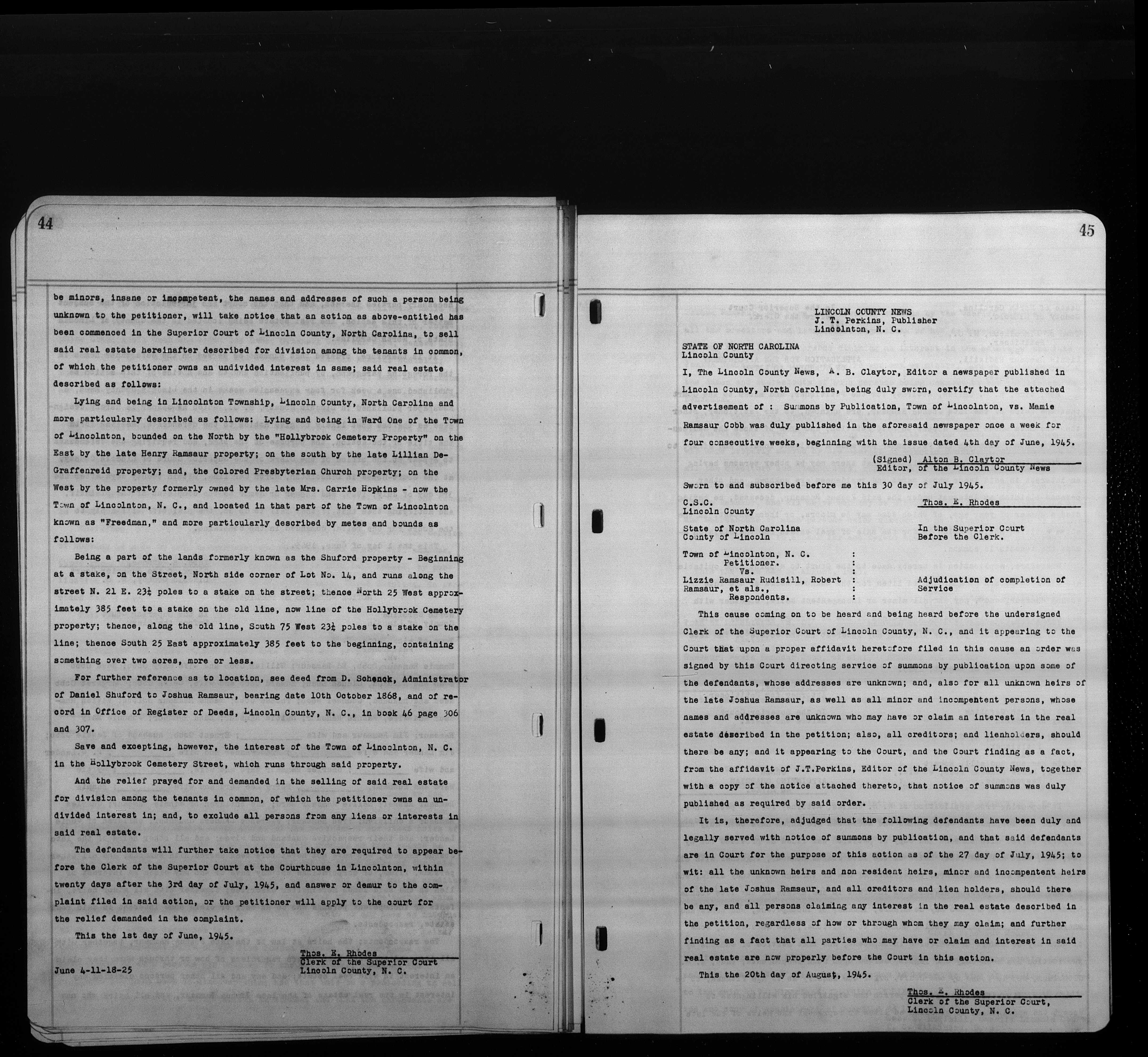
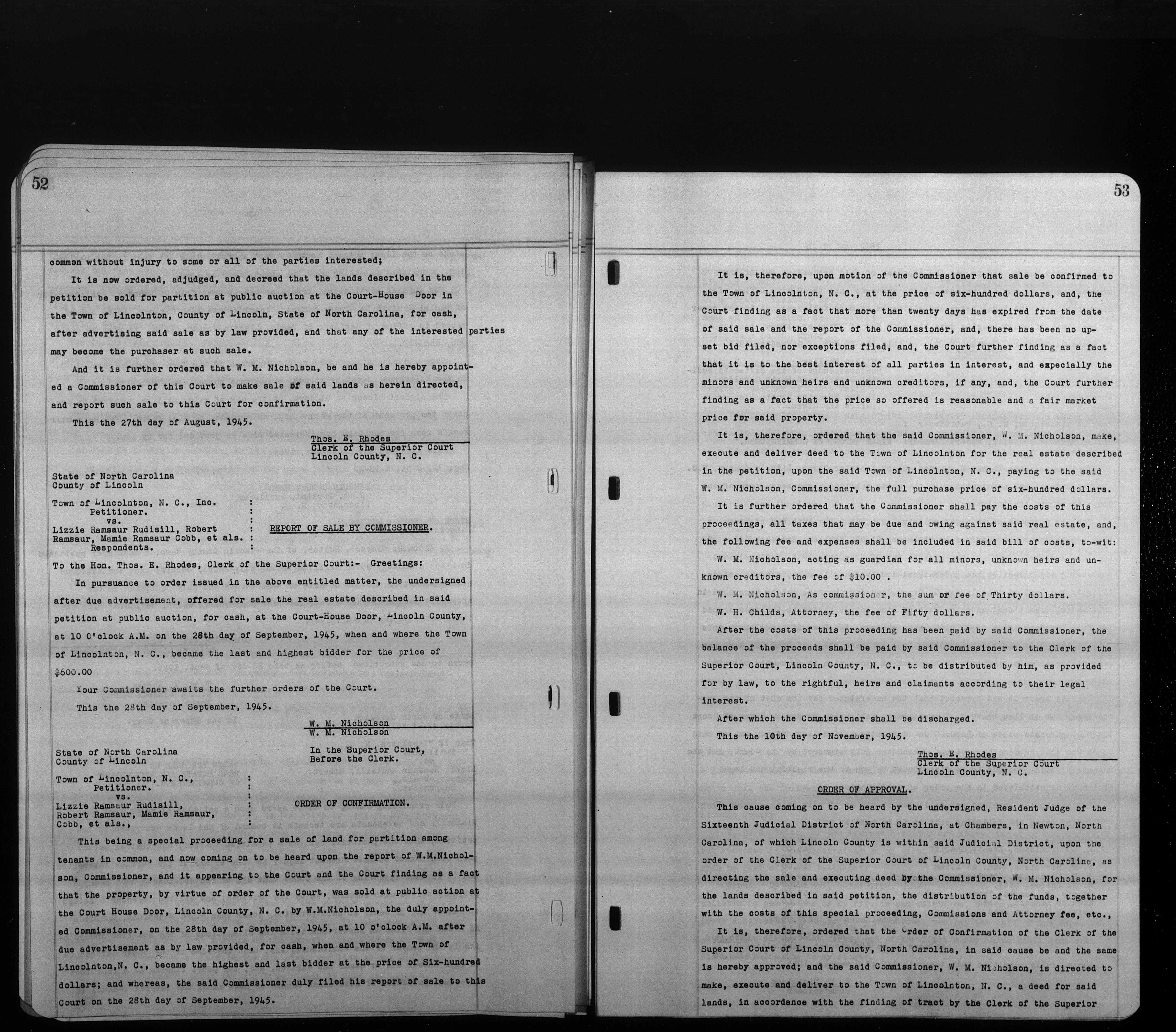
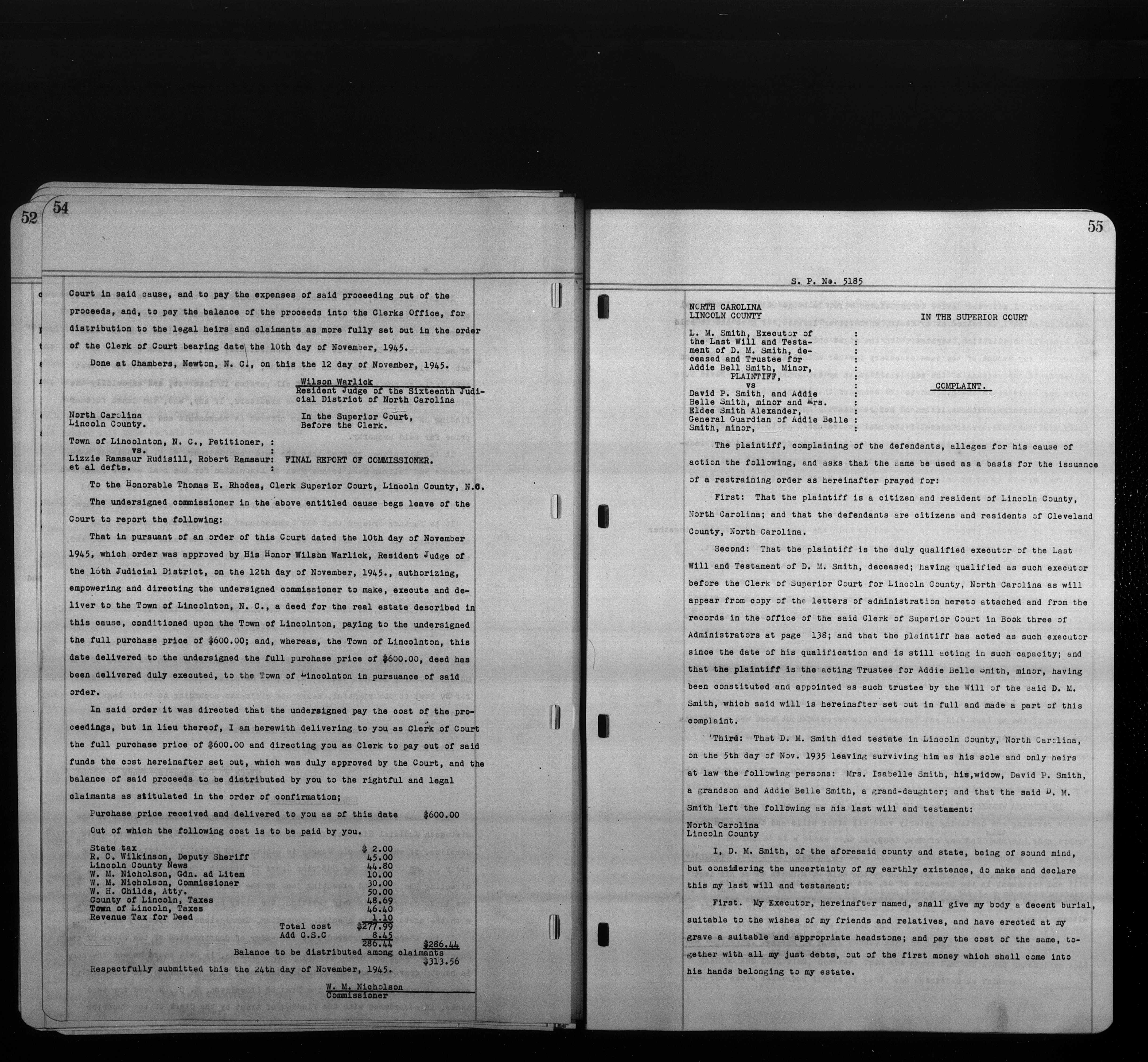
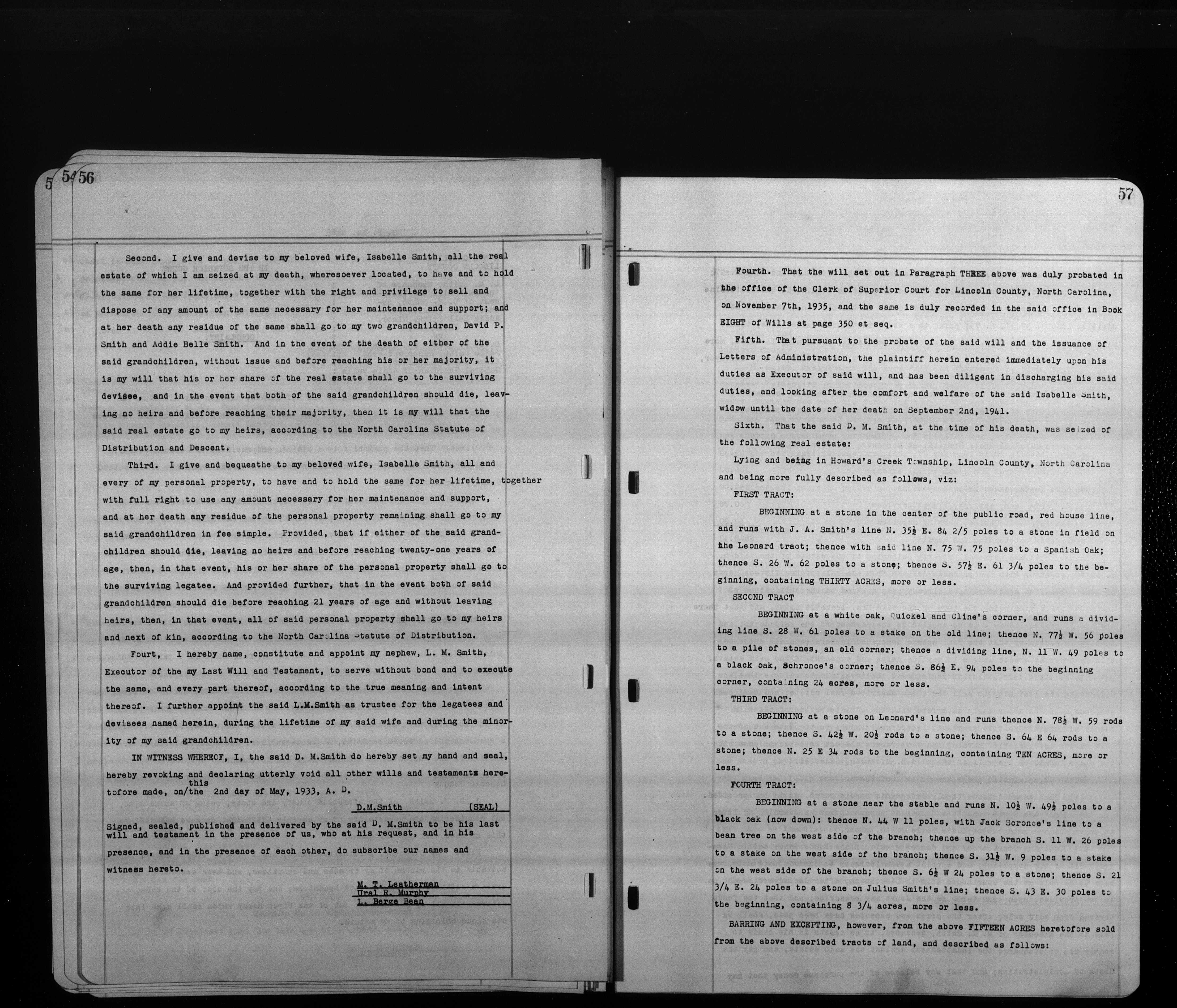
Against the odds of the Jim Crow decades, the settlement's ground passed among Black families for generations — Hannah's Lot No. 3 folded into the continuous Lander holding; Richmond Scott's six acres; the “Old Mag Slade Lot” still a named landmark in 1923; the Ramsaur family's tenancy-in-common still being settled in 1945.
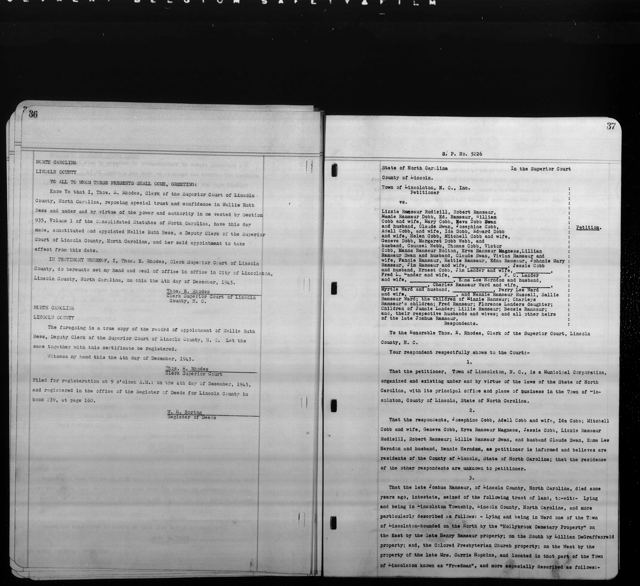
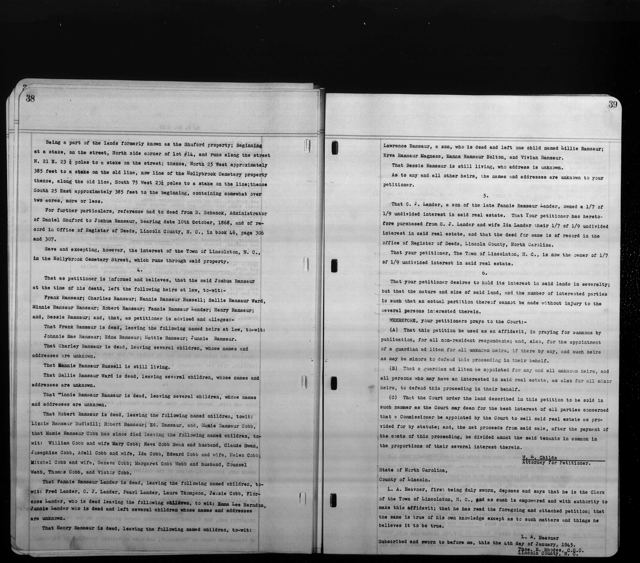
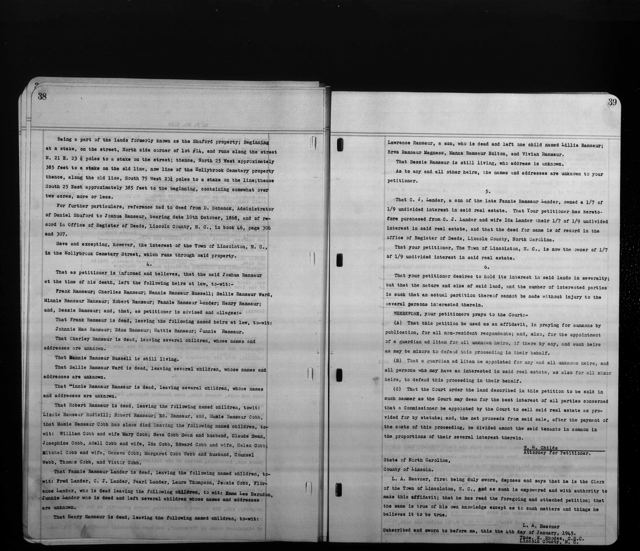
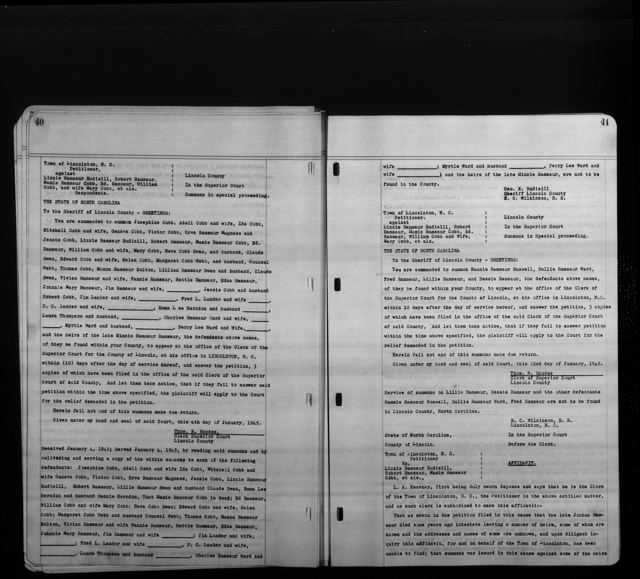
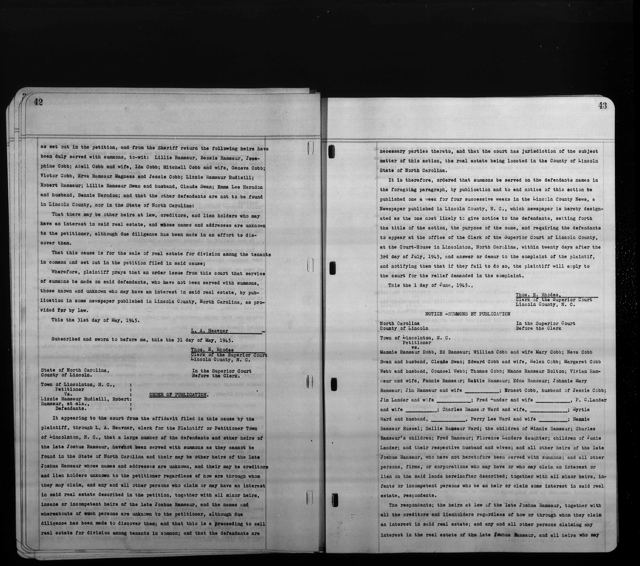
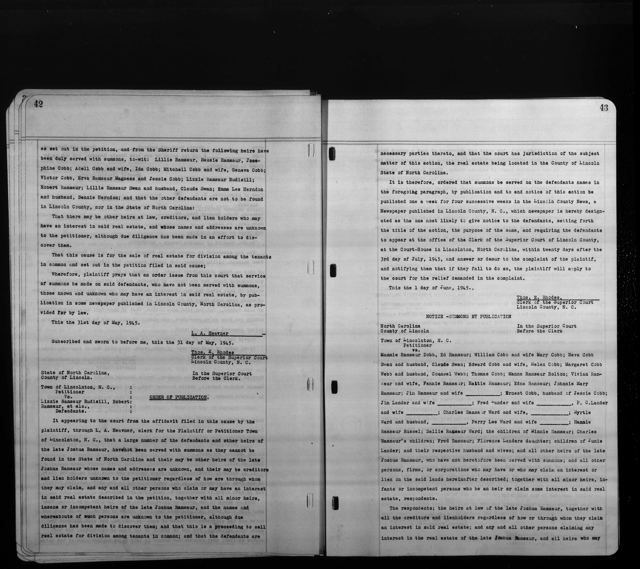
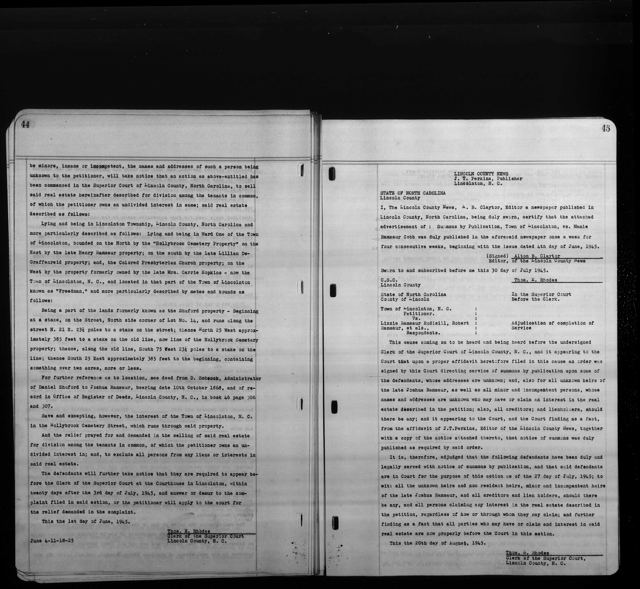
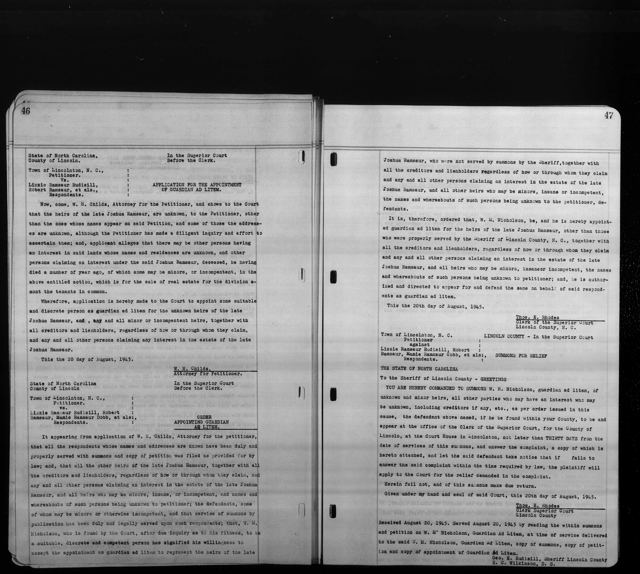
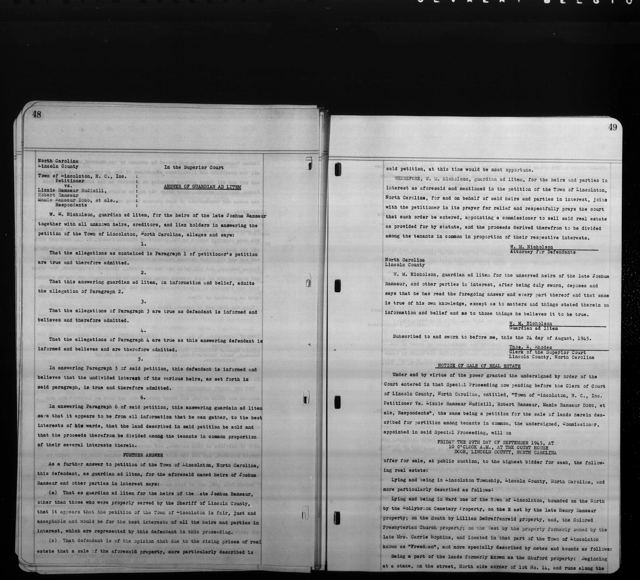
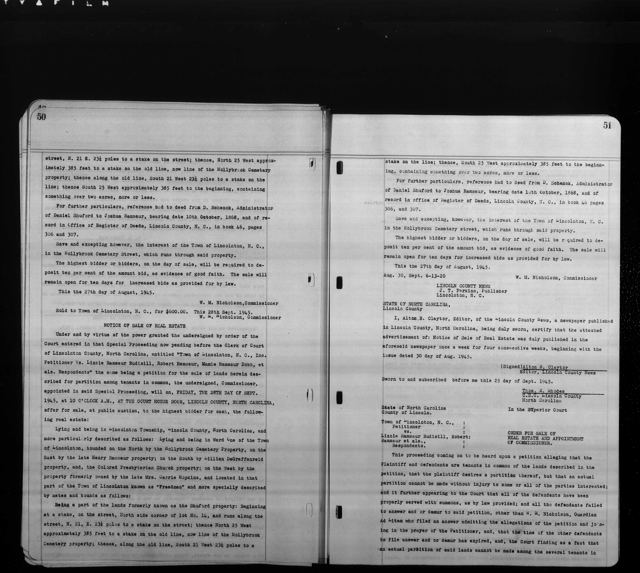
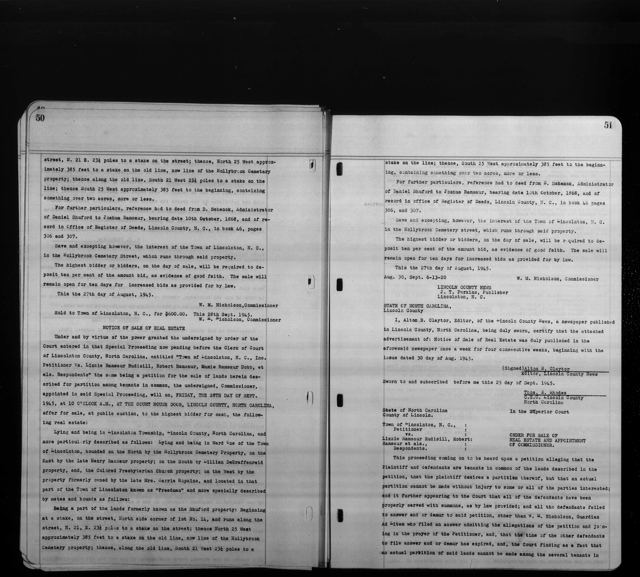
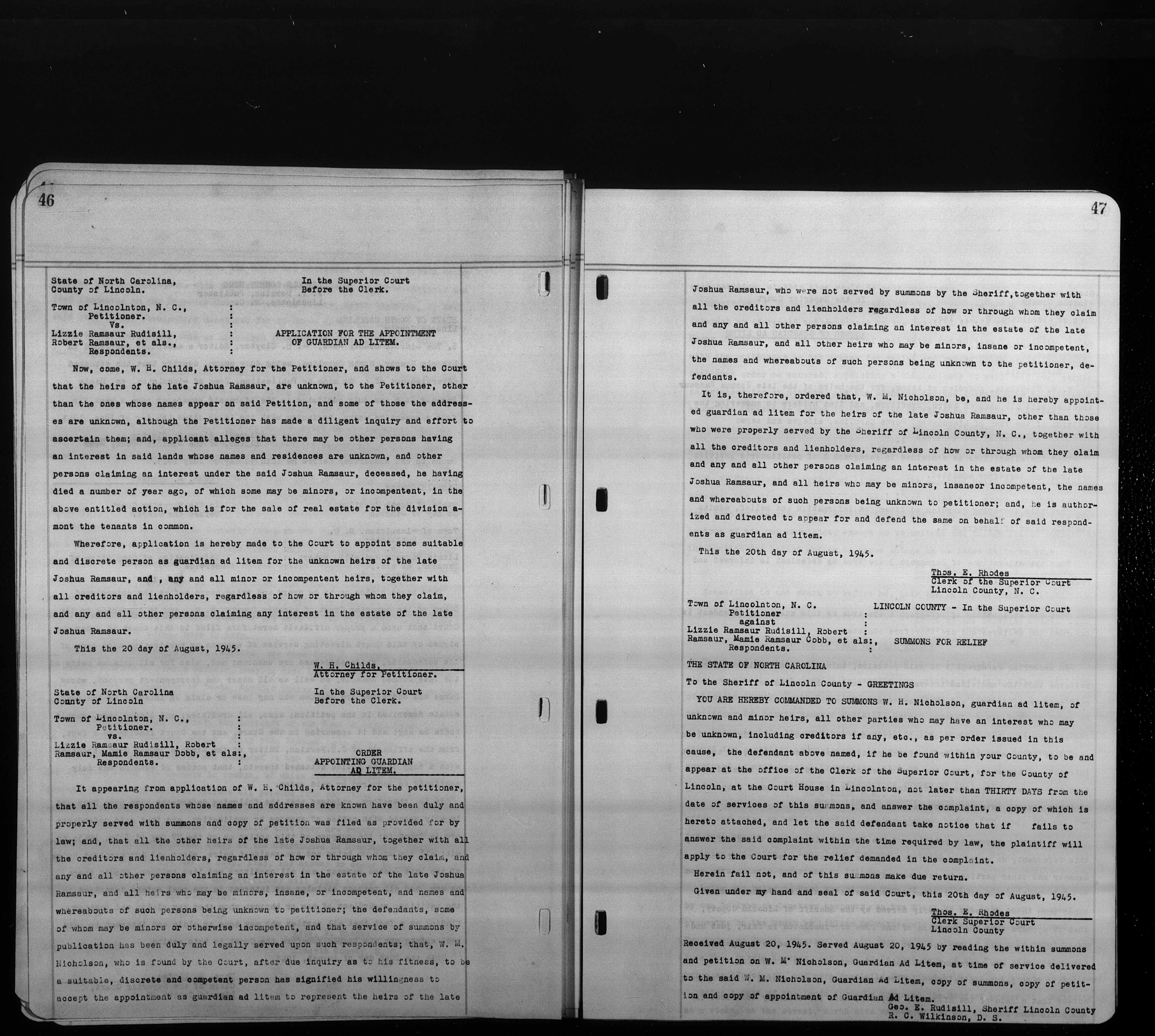
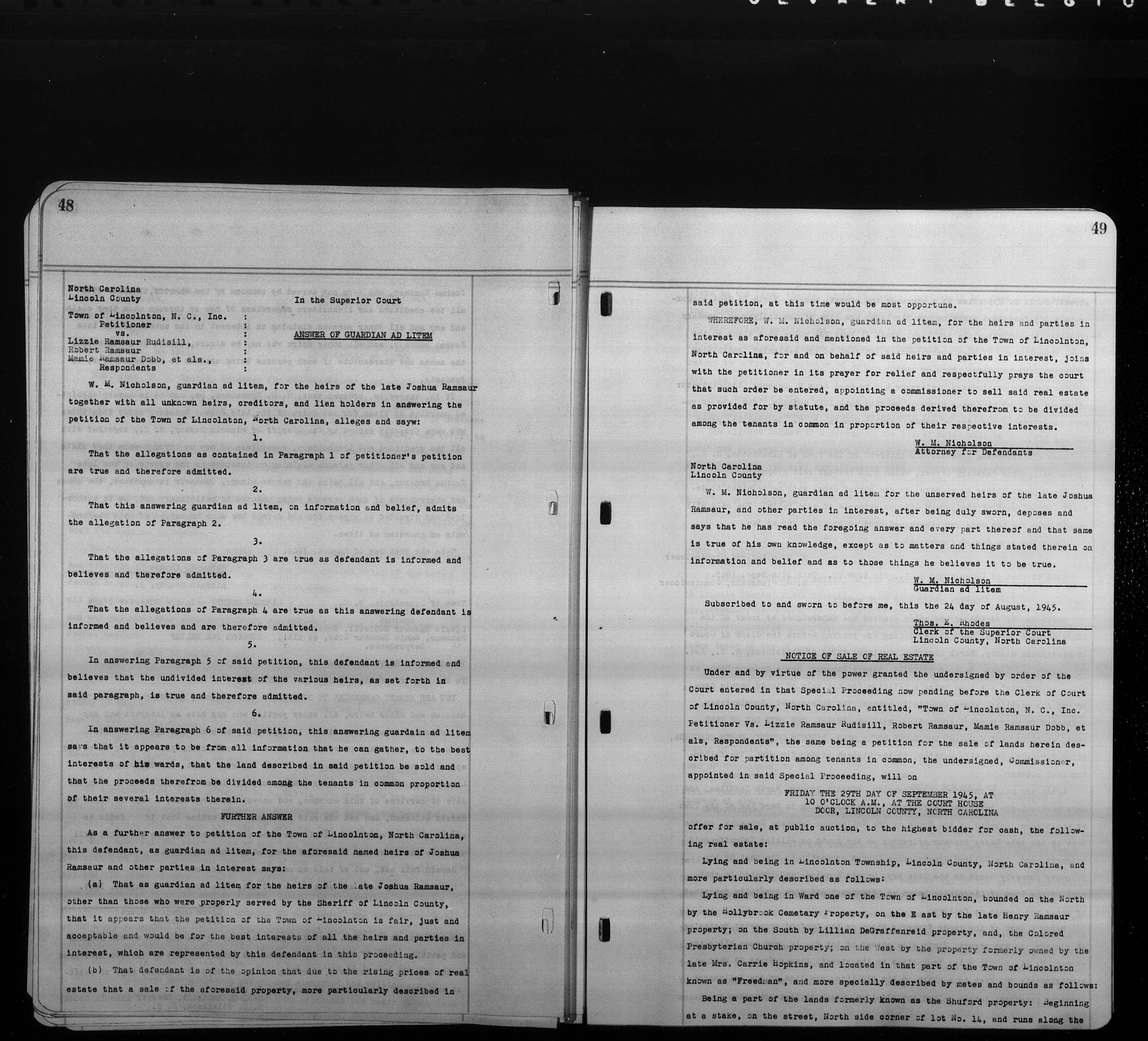
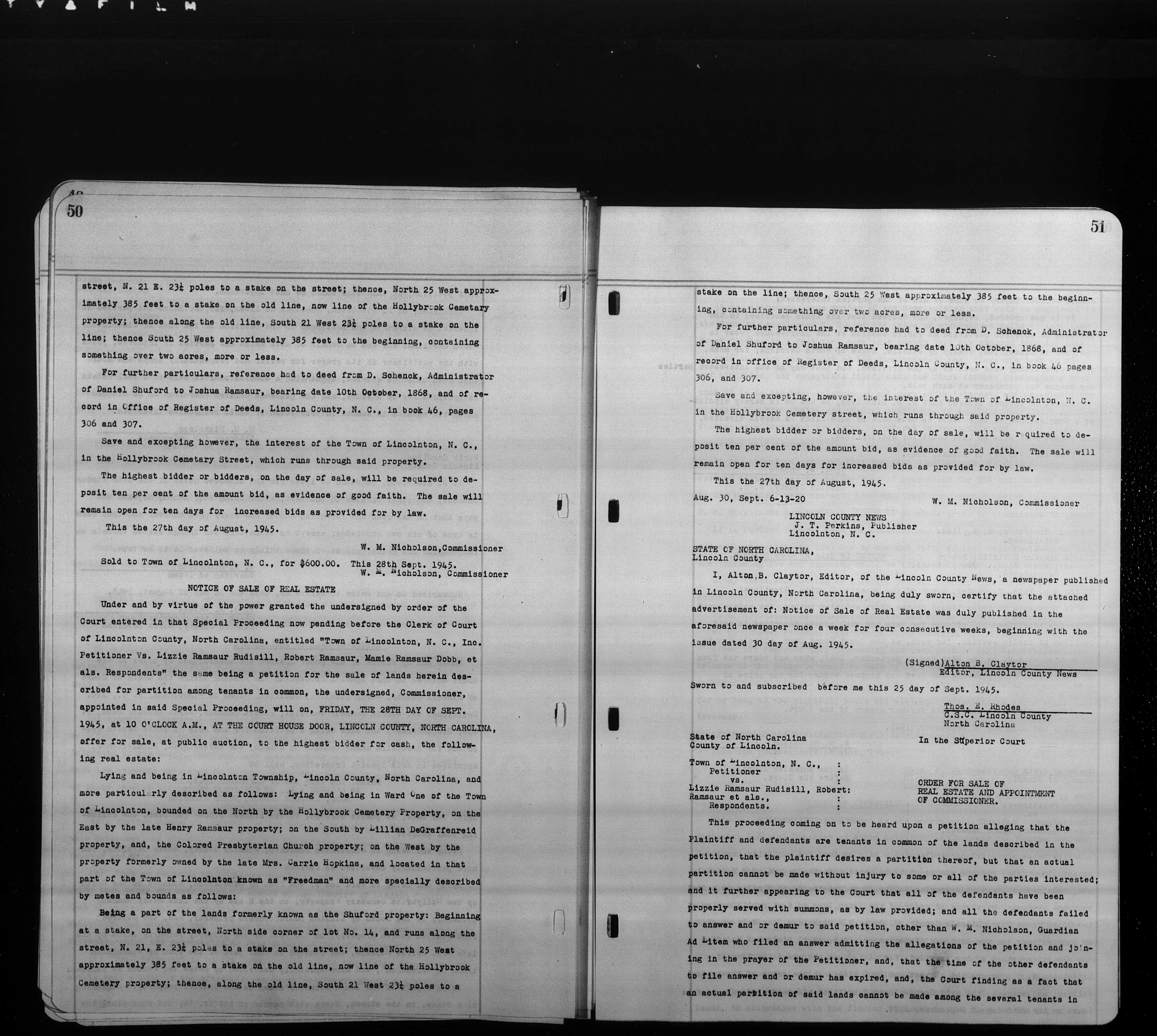
Ramsour Tenants-in-Common Notice, 1945 — p. 1
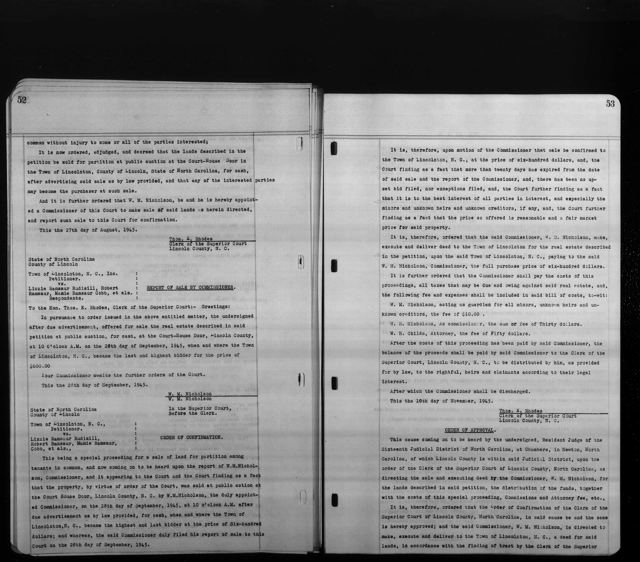
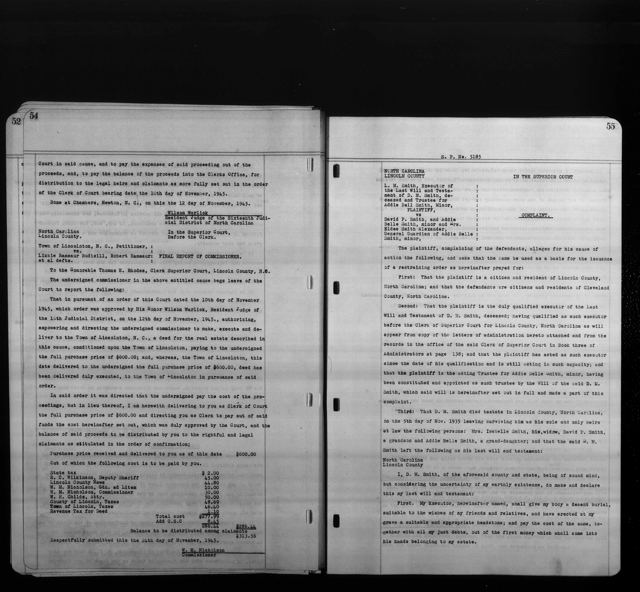
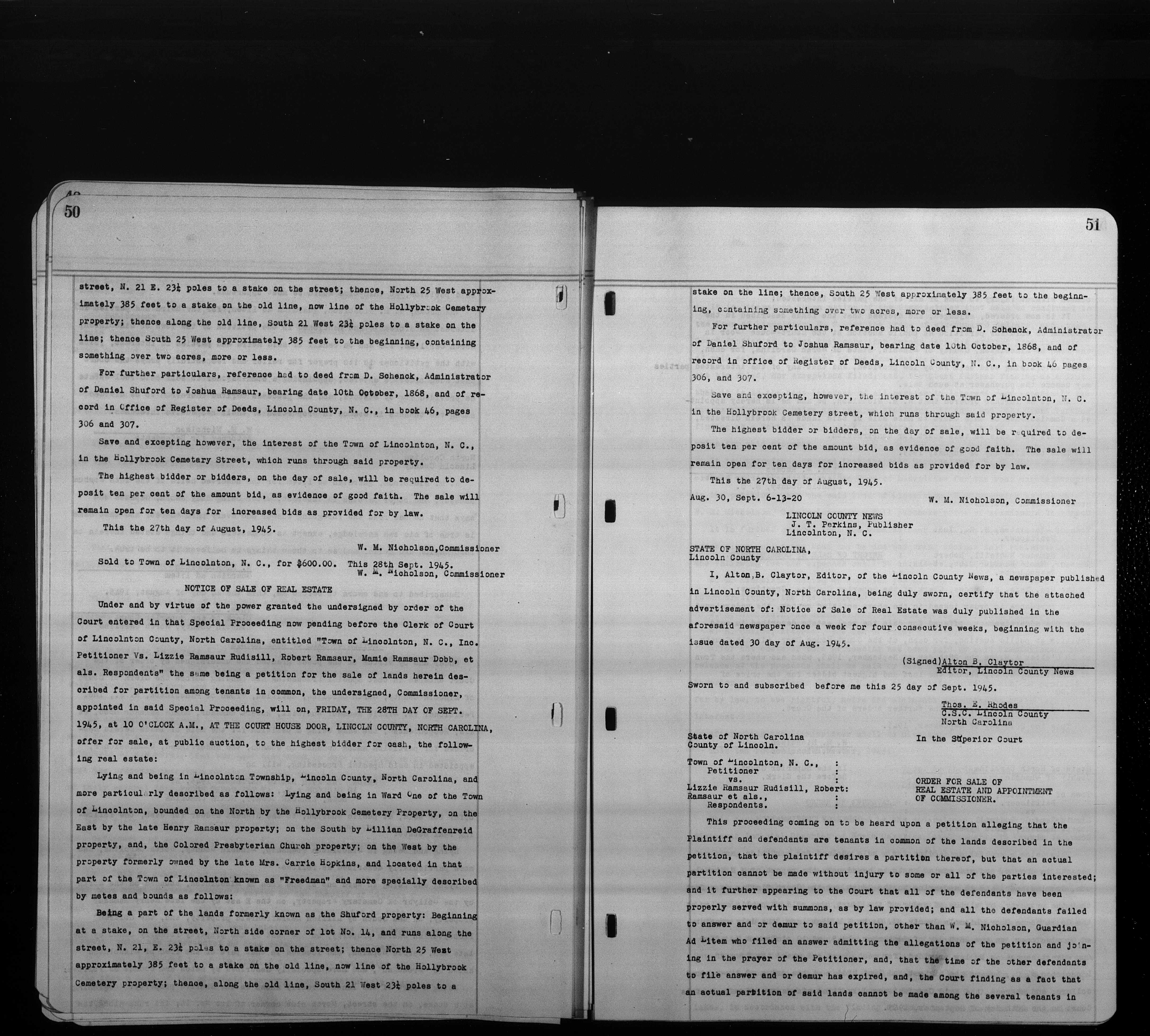
A 1945 partition proceeding over Lincolnton land held by the Ramsaur family — one of Freedman Town's founding Black families — documenting the settlement's landholdings passing between generations into the mid-twentieth century.